Posterior Polar Cataract: Causes, Symptoms & Treatment
- By Centre For Sight
- 8 minutes
Blog Summary
- Posterior polar cataract affects central vision early due to a fragile posterior lens capsule.
- Strong genetic links make early screening important, especially in affected families.
- Posterior polar cataract surgery requires advanced techniques to minimise capsular rupture risks.
- Strict postoperative care helps reduce cataract complications and supports optimal visual recovery.
- Timely diagnosis and expert management ensure excellent long-term visual outcomes.
Cataracts are among the leading causes of reversible vision impairment worldwide. While most people are familiar with age-related cataracts, some forms are rarer, more complex, and require specialised management. One such condition is posterior polar cataract, a unique and clinically significant cataract subtype that presents distinct challenges in diagnosis, treatment, and surgery.
This comprehensive guide explores posterior polar cataracts in detail - covering their causes, symptoms, inheritance patterns, surgical considerations, and post-operative care. Whether you are a patient, caregiver, or simply seeking to understand different types of cataracts, this article aims to simplify complex concepts while offering medically accurate and practical insights.
What Is Posterior Polar Cataract?
A posterior polar cataract is a cataract that develops at the back (posterior pole) of the eye's natural lens, directly in front of the posterior lens capsule. This location is clinically important because the posterior capsule is thin and fragile in such cases, increasing the risk of surgical complications.
Unlike common age-related cataracts that progress slowly, posterior polar cataracts often affect vision early, even when the opacity appears small. They are frequently bilateral and commonly associated with genetic factors, although acquired cases can also occur.
How Posterior Polar Cataract Differs From Other Types of Cataract??
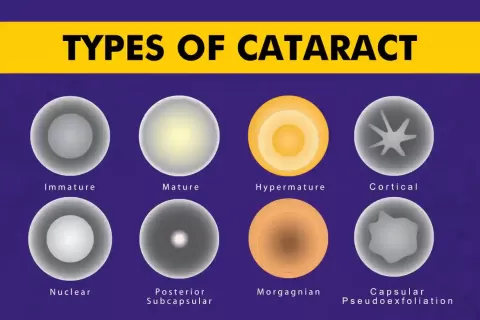
Understanding posterior polar cataracts requires context within the broader spectrum of types of cataract, which include:
- Nuclear cataract (central lens clouding)
- Cortical cataract (peripheral spoke-like opacities)
- Posterior subcapsular cataract (just beneath the capsule)
- Congenital cataract (present at birth)
What makes posterior polar cataracts unique is their central posterior location and inherent capsular weakness, which significantly influences surgical planning and outcomes.
Symptoms of Posterior Polar Cataract
Symptoms often appear earlier compared to other cataract types and may progress unpredictably.
Common Symptoms Include:
- Blurred or hazy central vision
- Difficulty reading or focusing on fine details
- Increased glare from headlights and bright lights
- Halos around light sources
- Reduced contrast sensitivity
Even mild posterior polar cataracts can cause disproportionately severe visual symptoms due to their strategic position along the visual axis.
Causes and Risk Factors
Genetic Association
Posterior polar cataracts are frequently inherited and often follow an autosomal dominant pattern, meaning a single affected parent can pass the condition to offspring.
Congenital and Acquired Causes
- Congenital cases: Present at birth or early childhood
- Acquired cases: May develop later due to trauma, metabolic disorders, or unknown factors
In many patients, no environmental trigger is identified, reinforcing the strong genetic link.
Characteristics & Classification of Posterior Polar Cataract
Characteristics of Posterior Polar Cataract
- Location: Post polar cataracts distinguish themselves by forming at the back of the lens, specifically in the region known as the posterior pole. This unique location contributes to distinct visual symptoms.
- Opacity and Vision Impairment: The cloudiness of the lens interferes with the passage of light through the eye, resulting in impaired vision.
- Symptoms: Beyond blurred vision, individuals commonly report increased sensitivity to bright light, which can lead to discomfort from glare or halos around light sources, making activities like driving at night challenging.
Classification of Posterior Polar Cataract:
- Congenital Variety: Some cases of posterior polar cataracts are congenital, meaning they are present at birth.
- Acquired Form: In contrast, polar cataracts can also develop later in life, typically due to factors such as ageing, trauma, or underlying medical conditions. The acquired variety may have different progression patterns and visual implications.
- Genetic Association: Genetic tendency exists in certain instances, reinforcing the idea that genetic factors contribute to the development of posterior polar cataracts. Understanding this genetic link is crucial for both diagnosis and preventive measures.
Inheritance and Genetics
- Familial Predisposition: Posterior polar cataracts often exhibit a familial tendency, suggesting a genetic influence in their development.
- Genetic Mutations: Genetic mutations can be passed down through generations, increasing the likelihood of the condition within families.
- Congenital Cases: In instances where post polar cataracts are present at birth (congenital), a strong association with genetic factors becomes apparent. Family history assessments often reveal patterns of inheritance.
- Autosomal Dominant Inheritance: In some cases, posterior polar cataracts follow an autosomal dominant pattern, meaning that an affected individual has a 50% chance of passing the gene to their offspring.
- Gene Mapping Studies: Ongoing research involves gene mapping studies to identify specific genes associated with polar cataracts.
Difference Between Posterior Polar Cataract and Posterior Subcapsular Cataract
| Aspect | Posterior Polar Cataract | Posterior Subcapsular Cataract |
| Location in the Eye | Forms at the back of the lens (posterior pole). | Develops just beneath the lens capsule. |
| Opacity Appearance | Results in cloudiness or opaqueness in the lens. | Appears as a clouding near the back capsule. |
| Common Symptoms | Blurred vision, sensitivity to light, glare. | Glare, halos around lights, difficulty reading. |
| Onset | Can be congenital or acquired later in life. | Typically develops later in life, often due to ageing or factors like diabetes. |
| Causes | Often associated with genetic factors. | Linked to ageing, diabetes, and corticosteroid use. |
| Treatment Approach | Surgical removal of the cloudy lens. Surgical complexity is higher in view of the chances of pre-existing capsular weakness. | Surgical intervention, with additional emphasis on managing underlying conditions. |
| Prognosis | Generally good with appropriate treatment. | Generally good, but may pose challenges, especially in cases related to underlying health conditions. |
| Risk Factors | Genetic predisposition. | Ageing, diabetes, corticosteroid use. |
Understanding the differences between posterior polar cataracts and posterior subcapsular cataracts is crucial for accurate diagnosis and tailored treatment plans.
Surgical Treatment for Posterior Polar Cataract
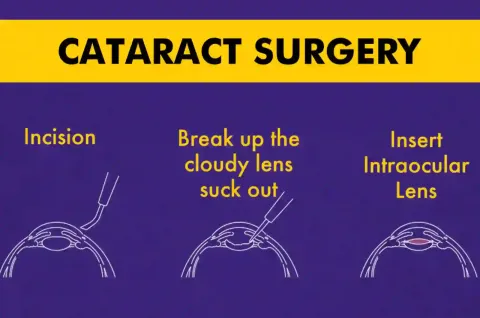
Below is the treatment procedure for posterior polar cataract in a step-by-step manner:
1. Preparation:
- Local anaesthesia is administered for comfort.
- Small incision is made at the side of the cornea.
2. Capsulotomy:
- Circular opening created in the lens capsule.
3. Phacoemulsification:
- Cloudy lens broken into small fragments using ultrasound.
- Fragments suctioned out, leaving the capsule.
4. Artificial Lens Implantation:
- Artificial intraocular lens (IOL) inserted to replace the natural lens.
5. Closure:
- Self-sealing incision; no stitches required.
- Protective shield may be placed briefly.
6. Post-operative Care:
- Prescribed eye drops for infection prevention and healing.
7. Recovery:
- Improved vision shortly after surgery.
- Follow post-operative care instructions for a few weeks.
Potential Cataract Complications
Despite careful technique, posterior polar cataract surgery carries higher risks than routine cataract procedures.
Possible cataract complications include:
- Posterior capsule rupture
- Vitreous loss
- Retained lens fragments
- Increased intraocular pressure
- Inflammation or infection
Early detection and prompt management significantly reduce long-term visual consequences.
Post Operative Management for Posterior Polar Cataract
Effective recovery depends heavily on strict adherence to postoperative instructions.
- Use the prescribed antibiotic and anti-inflammatory eye drops
- Avoid eye rubbing or pressure
- Wear protective sunglasses outdoors
- Avoid swimming, dust, and strenuous activities
- Maintain strict hand hygiene
Follow-up appointments allow the surgeon to monitor healing and detect complications early.
Posterior Polar Cataract in Children
Posterior polar cataract in children is a congenital condition where cloudiness forms at the back of the eye's lens at an early age or at the time of birth. Key points include:
- Genetic Link:
Strong association with genetic factors, often running in families.
- Congenital Onset:
Typically present at birth or during infancy.
- Effect on Vision:
Cloudiness can impact a child's vision, causing blurred vision.
- Diagnosis:
Pediatric ophthalmologists use specialised techniques, often under anaesthesia, for accurate diagnosis.
- Treatment:
Surgical intervention to remove the cloudy lens and implant an artificial lens for clear vision.
- Post-operative Care:
Close monitoring post posterior polar cataract surgery for proper healing and vision development.
- Outlook:
Timely intervention can lead to improved vision and a normal, healthy childhood.
Parents should be attentive to signs of visual issues in children, seeking professional evaluation for early intervention and optimal outcomes.
Cost Considerations for the Treatment of Posterior Polar Cataract
The overall cost of addressing posterior polar cataracts varies, influenced by factors such as surgical intricacy, the surgeon's expertise, geographical location, the chosen procedure, and additional medical considerations.
- Medical Consultations: Initial eye exams and assessments.
- Surgery Fees: Including the surgical procedure and surgeon's fees.
- Intraocular Lens (IOL): Cost varies based on the type of IOL lens selected.
- Facility Fees: Charges associated with utilising surgical facilities.
- Postoperative Care: Includes follow-up appointments and prescribed medications.
- Geographical Variation: Costs may differ by region and country.
Frequently Asked Questions
Can posterior polar cataracts be detected early through regular eye exams?
Is surgery the recommended treatment for posterior polar cataracts?
How successful is surgery in treating posterior polar cataracts?
Are there any non-surgical approaches to managing posterior polar cataracts?
Are there any potential complications or risks associated with posterior polar cataract surgery?
Can posterior polar cataracts recur after surgery?
What causes posterior polar cataract?
What is the difference between polar and PSC cataracts?
What are the posterior cataract symptoms?
How do you treat a posterior cataract?
Is posterior polar cataract hereditary?
Why is posterior polar cataract surgery considered high risk?
Can a posterior polar cataract affect vision early?
What are common cataract complications in posterior polar cataract surgery?
Is posterior polar cataract surgery successful long-term?

Could not find what you are looking for?


