Nuclear Cataract Symptoms, Causes, and Treatment Options
- By Centre For Sight
- 7 minutes
Blog Summary
- Nuclear cataract affects the central part of the lens (nucleus), causing gradual blur, dull colours, and night glare.
- It develops slowly with age due to protein changes in the lens, and risk increases with UV exposure, smoking, and diabetes.
- Early signs include frequent glasses power changes, "second sight" (temporary near-vision improvement), and difficulty seeing at night.
- Stages progress from mild yellowing and glare to brown hardening (brunescence) that severely limits daily vision.
- Treatment options start with anti-glare lenses, brighter lighting, and lifestyle changes; advanced stages require nuclear cataract surgery.
- Modern cataract surgeries like phacoemulsification and laser-assisted procedures are safe, stitchless, and offer quick recovery.
- Prevention tips: Use UV400 sunglasses, eat antioxidant-rich foods, avoid smoking/alcohol, and manage diabetes and blood pressure.
- With timely diagnosis and proper care, surgery restores clear, comfortable vision and prevents long-term visual disability.
Nuclear cataract is a clouding and hardening of the lens center that slowly blurs vision and dulls colours. Many people confuse normal aging changes with disease, so early nuclear cataract symptoms, more power for glasses, glare at night, and yellowed vision get missed.
This blog explains what a nuclear cataract is, why it happens, the stages, and the nuclear cataract treatment options including when surgery is the right step.
What is a Nuclear Cataract
A nuclear cataract forms in the centre (nucleus) of the eye's natural lens and develops slowly with age. As proteins in the nucleus change, the lens becomes harder and turns yellow-brown, this is called nuclear sclerosis cataract.
The colour shift and hardening bend light differently, so fine detail, contrast, and depth perception gradually decline. Early on, some people notice second sight(near vision seems better for a while) before overall clarity worsens.
Nuclear Cataract Symptoms
Below are the nuclear cataract symptoms:
- Gradual blur or haze: Fine print and distant details get harder to see over months to years.
- Night glare and halos: Headlights and streetlights scatter more, making night driving difficult.
- More nearsighted (myopic shift): Frequent prescription changes; near vision briefly improves.
- Yellow or brown tint to vision: Colours look dull or "warm", blues/greens are harder to distinguish.
- Reduced contrast: Harder to tell similar shades apart, especially in dim light.
- Monocular double vision: Double/ghost images in one eye from light scatter through the lens.
If you're over 50 or notice these symptoms, book a comprehensive eye exam to confirm the stage and discuss options.
Causes of Nuclear Cataract
A mix of age and lifestyle factors drives the risk of nuclear cataract. Below are the causes of nuclear cataract:
- Ageing: Natural lens changes accumulate over time, this is the most common cause.
- Genetics: Family history raises the chance of earlier or faster change.
- Smoking and heavy alcohol use: Increases oxidative stress that clouds the lens.
- UV exposure: Years of sun without UV-blocking eyewear speeds lens yellowing.
- Medical conditions: Diabetes and uncontrolled hypertension can accelerate lens aging.
- Long-term corticosteroids: Some oral or eye-drop steroids can hasten cataract formation.
- Poor diet/low antioxidants: Fewer vitamins (like C/E) and carotenoids raise risk over time.
Nuclear Cataract Stages
Below are the nuclear cataract stages that progress slowly, and timing varies by person.
- Early stage: In the early stage, mild yellowing with little impact on vision is visible;second sight(better near focus) also appears.
- Moderate stage: In the moderate stage, there is noticeable blur, glare, and colour dulling; prescriptions change more often and reading small print takes effort.
- Advanced stage: In the advanced stage, the lens looks brown; contrast drops, night driving is difficult, and daily activities are limited.
- Mature stage: In the mature stage, there is severe vision impairment; nuclear cataract surgery is advised to restore clear sight at this stage.
Nuclear Cataract Types
Below are the nuclear cataract types:
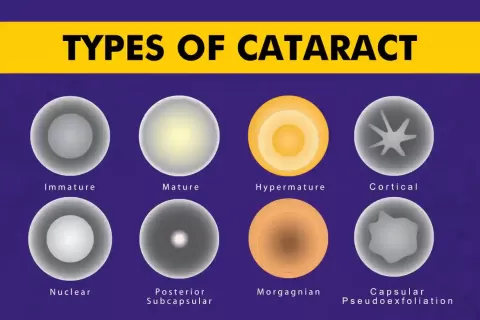
- Nuclear sclerosis cataract (early to moderate):
The lens centre slowly hardens and turns yellow. Vision feels warmer, distance details soften, and night glare begins. Some people notice short-term second sight (near vision seems better) before overall clarity drops.
Regular glasses updates can help for a while, but glare and contrast loss gradually increase.
- Nuclear brunescence (advanced nuclear cataract):
The nucleus becomes deep brown. Colours look muddy, blues/greens are hardest to see, and headlights/starbursts at night are prominent.
Reading road signs and faces in dim light is difficult. At this stage, daily life is affected, and nuclear cataract surgery is the most effective solution.
- Mixed nuclear cataract (nuclear + other patterns):
Nuclear change can occur alongside cortical spokes (from the lens edges) or posterior subcapsular (PSC) haze (at the back of the lens). Mixed patterns cause faster glare and near problems than nuclear alone.
For example, nuclear + PSC can make bright-light discomfort and reading difficulty show up earlier than expected for your stage.
- Myopic-shift-dominant nuclear cataract:
A subtype of nuclear sclerosis where the main early change is increasing nearsightedness. You keep needing stronger minus power, enjoy brief spectacle independence for near tasks, then notice growing blur and glare over months.
Good lighting and anti-glare lenses help temporarily; progression guides the timing of surgery.
- Colour-shift dominant nuclear cataract:
Another nuclear pattern where the earliest complaint is colour dulling and poor contrast rather than blur. Whites look cream, blacks look grey, and matching clothes/paint tones becomes tricky.
This type especially affects artists/drivers who rely on colour fidelity and contrast.
- Dense/hard nucleus:
An advanced nuclear lens that is optically very dense and physically harder. Surgeons plan different energy settings, fluidics, or laser-assisted steps to remove it safely.
Nuclear Cataract Diagnosis
A full eye exam confirms a nuclear cataract and rules out other problems. Your ophthalmologist will perform the following tests:
- Visual acuity test: This test checks how clearly you see letters at a distance and near.
- Slit-lamp examination: In this test, the ophthalmologist looks closely at the lens to grade nuclear sclerosis cataract and note colour/hardness.
- Retinal examination (after dilation): This test ensures the retina and optic nerve are healthy and not limiting vision.
- Glare sensitivity test: This test measures how stray light and headlights affect clarity.
- Contrast sensitivity test: This test checks how well you see similar shades in dim light.
Nuclear Cataract Treatment Options
Treatment depends on how much nuclear cataract symptoms affect daily life. Early on, small changes help; later, nuclear cataract surgery restores clear sight. Below are the nuclear cataract treatment options:
Non-Surgical Treatment
Below are the non-surgical treatment options for cataract:
- Prescription glasses: It offsets the myopic shift (second sight) and improves clarity.
- Anti-glare lenses/night driving aids: It reduces halos and headlight scatter.
- Brighter lighting: It makes reading and fine tasks easier.
- Lifestyle changes: Wearing UV-protected sunglasses, no smoking, eating a balanced diet with antioxidants, and control of diabetes/blood pressure to slow progression.
Nuclear Cataract Surgery
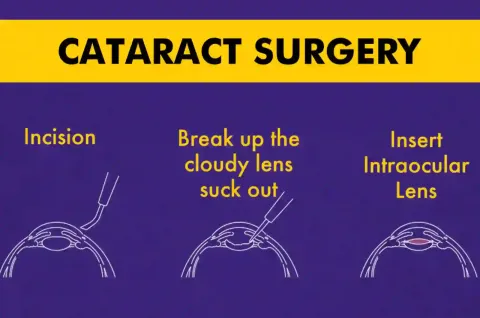
If symptoms become severe, nuclear cataract surgery becomes necessary. With a skilled surgeon, modern cataract surgery procedures are safe and effective. Your doctor will match IOL type (monofocal, toric, multifocal/trifocal, if suitable) to your visual goals.
- Phacoemulsification (stitchless):
The ultrasound breaks the cloudy lens an artificial intraocular lens (IOL) is implanted. Fast recovery, day-care procedure.
- Laser-assisted cataract surgery:
A femtosecond laser makes precise incisions and softens the lens; IOL placement follows. Micro-incision, stitchless, day-care.
- Extracapsular cataract extraction (ECCE):
The lens was removed in one piece with stitches; used mainly for very advanced, hard nuclei. Recovery takes longer.
Nuclear Cataract Prevention
Below are the ways to prevent nuclear cataract:
- Wear UV400 sunglasses outdoors to limit long-term lens yellowing.
- Eat a balanced diet rich in colourful fruits/vegetables (vitamins C/E, carotenoids) and stay hydrated.
- Avoid smoking and heavy alcohol, which increase oxidative stress.
- Manage health issues like diabetes and hypertension.
- Schedule regular eye exams, especially after 50, to track change and time surgery well.
Conclusion
A nuclear cataract builds up slowly in the lens center, first dulling colours and boosting glare, then making daily tasks hard. Early on, glasses and better lighting help; when vision limits life, modern cataract surgery with an IOL brings clear, comfortable sight back.
The right timing comes from regular exams and a simple plan you and your doctor agree on. With today's techniques, outcomes are reliable and recovery is quick.
Frequently Asked Questions
How is a nuclear cataract different from other types of cataracts?
Is nuclear cataract surgery risky?
Can nuclear cataracts be reversed without surgery?
At what age do nuclear cataracts typically develop?
Is a nuclear cataract serious?
What is the difference between a cataract and a nuclear cataract?
How fast do nuclear cataracts progress?
What is the success rate of nuclear cataract surgery?
Could not find what you are looking for?


