Stye in Eye: Causes, Symptoms, Types & Treatment
- By Centre For Sight
- 8 minutes
Blog Summary
- A stye is a common bacterial infection of the eyelid glands.
- Most cases heal within a week with simple home-based stye treatment.
- Warm compresses are the safest first step when learning how to get rid of an eye stye.
- Persistent, severe, or spreading infections may require medical treatment. Antibiotics are indicated only in selected cases.
- Maintaining eyelid hygiene reduces the risk of recurring eye infections.
You wake up with a tender, red bump on your eyelid & your first thought is: What is this, and how do I get rid of it? Stye eye is one of the most common eyelid conditions. It affects people of all ages.
It often appears suddenly- One day your eye feels perfectly normal, & the next day there is swelling, pain, and irritation. While it can feel uncomfortable, it usually improves with simple care.
What Is a Stye in the Eye?
A stye eye is tender, red, & often pus-filled painful bump on the edge of the eyelid that forms when a blocked oil gland near the eyelashes gets infected. Medically called a hordeolum, it resembles a pimple & can develop on the upper or lower eyelid. While it can feel uncomfortable, it rarely affects your vision or long-term eye health.
Types of Stye in the Eye
There are two types of styes in the eyes:
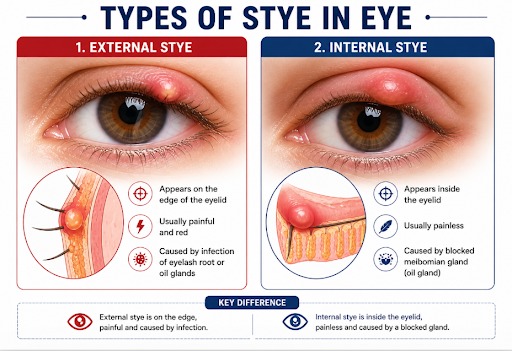
A. External Stye/ Hordeolum
It appears on the eyelid or around the rim. They can turn yellow, fill with pus, and become painful. It can be connected to infections with one or more of the following:
- Lash follicles
- Sebaceous (Zeis) gland
- Apocrine (Moll) gland
External stye eye infections are more visible and often easier to manage with hygiene measures.
B. Internal Stye/ Hordeolum
Internal hordeolum are caused by an infection in the meibomian gland, which produces the oily layer of tears. It can be painful and may require medical stye treatment if swelling does not improve within a few days.
Symptoms of a Stye in the Eye
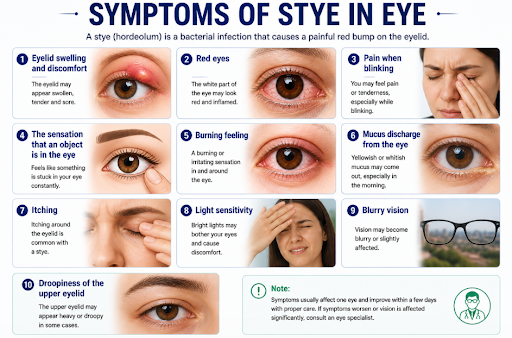
A hordeolum in the eye typically appears as a painful red swelling on the eyelid & may cause watering of the eye. It usually affects only one eye, although more than one hordeolum can develop at the same time. The symptoms consist of the following:-
- Eyelid swelling and discomfort
- Pain when blinking
- The sensation that an object is in the eye
- Burning feeling
- Mucus discharge from the eye
- Itching
- Light sensitivity
- Blurry vision
- Droopiness of the upper eyelid
In some cases, a stye eye may also cause crusting along the eyelid margins, especially after waking up. Mild swelling around nearby glands can also occur. It usually subsides as healing progresses.
Persistent swelling may sometimes indicate a chalazion, which is a blocked oil gland rather than an active infection & may require different stye treatments.
What Is the Difference Between a Stye and a Chalazion?
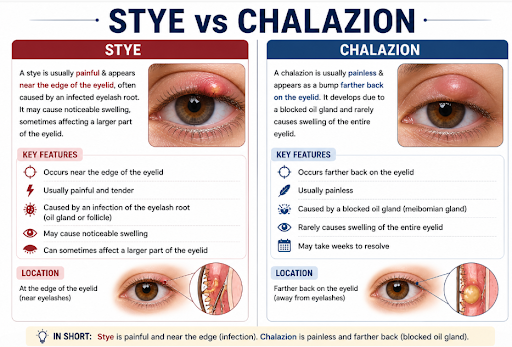
Sometimes it can be difficult to tell the difference between a stye and a chalazion.
A stye is usually painful & appears near the edge of the eyelid, often caused by an infected eyelash root. It may cause noticeable swelling, sometimes affecting a larger part of the eyelid.
A chalazion is usually painless & appears as a bump farther back on the eyelid. It develops due to a blocked oil gland and rarely causes swelling of the entire eyelid.
What are the causes & risk factors of Stye Eye?
Staphylococcus aureus bacteria cause approximately 95% of stye cases, blocking & infecting oil gland at the base of the eyelash. The following risk factors increase the likelihood of developing a stye in your eye:
| Risk Factor | How It Contributes |
| Touching eyes with unwashed hands | Transfers bacteria directly to the eyelid glands |
| Using expired or shared eye makeup | Old mascara & eyeliner harbour bacteria |
| Leaving makeup on overnight | Blocks oil glands, creating an infection-friendly environment |
| Wearing contact lenses without clean hands | Introduces bacteria near the eye |
| Hormonal changes or immune stress | Weakens the body’s ability to fight bacterial infections invasion |
| Lack of nutrients | Weakens overall immunity and slows healing |
| Lack of sleep | Affects immune response, making infections more likely |
Dry & dusty environments, and chronic eyelid inflammation can also contribute to hordeolum eye formation. It blocks oil glands & promotes bacterial growth. To avoid cross-contamination, if a household member has a hordeolum, others should avoid sharing towels or washcloths.
When to Be Concerned?
If the stye in the eye continues for more than a week, you can:-
- Start developing vision issues
- Swelling becomes more painful, & it starts bleeding
- Spreads to other areas of the face
- The eyelid/eyes become red.
Hence, you must see an eye doctor immediately.
Who Is at Risk of Getting a Stye?
Anyone can develop a hordeolum, but some people are more prone to it due to certain conditions or habits.
You may have a higher risk if you:
- Have blepharitis, a condition where the eyelid edges become inflamed and oily
- Have had a stye or chalazion in the past
- Have skin conditions such as rosacea or seborrheic dermatitis
- Have diabetes or other medical conditions that affect immunity
These factors can increase bacterial buildup or block oil glands, making it easier for a hordeolum to develop.
People with diabetes or weakened immunity may also be more prone to recurrent eye hordeolum infections because healing may be slower & bacterial growth easier.
How to Get Rid of a Stye?
Immediate Remedy for Eye Stye: Warm Compress Method
Soak a clean washcloth in hot water & hold it to the eyelid for 10 to 15 minutes at a time, 3 to 5 times a day, keeping the cloth warm by re-soaking it frequently.
- Wring out the cloth before applying
- Keep your eyes closed during the compress
- Gently massage the area after each session to encourage drainage
- Repeat consistently; once a day is not enough
Daily Home Care Treatment for Stye Eye
Proper eyelid hygiene plays an important role in preventing & managing a stye eye. Cleaning the eyelid margins gently with diluted baby shampoo or prescribed lid cleansers can reduce bacterial buildup.
Medical Treatments for Stye Eye
If the hordeolum is very painful, the doctor may suggest/ perform the following treatments:-
| Treatment | When It’s Used |
| Antibiotic eye drops/ointment | Persistent or spreading infection |
| Oral antibiotics | Infection spreading beyond the eyelid |
| Surgical incision & drainage in case of external hordeolum | If a hordeolum does not improve even after proper care, a doctor may recommend a minor procedure. This can involve removing an eyelash & gently draining the pus using a fine needle. After the procedure, they may prescribe lubricating eye drops or antibiotic ointments to support healing and prevent further infection. |
These treatments are usually recommended when the hordeolum is painful, persistent, or spreading. They are especially considered when the infection spreads or does not resolve naturally.
Doctors may also recommend preventive stye treatments for individuals with frequent recurrences. It is recommended to avoid using eye cream or contact lenses until the eye has fully healed.
How Long Does an Eye Stye Last?
Most hordeolum resolve on their own within 1 to 2 weeks with consistent treatment. External hordeolum often heals faster than internal ones. If there is no improvement after 48–72 hours of home care, consult an eye doctor.
How to Prevent a Stye Eye?
While not all cases can be prevented, certain habits significantly lower the chances of developing a stye eye:
- Maintain proper eyelid hygiene
- Wash your hands thoroughly before touching your eyes or face
- Remove makeup before sleeping
- Avoid sharing cosmetics
- Replace eye makeup every few months
- Disinfect contact lenses properly & replace them as directed
- Use a warm compress regularly if you have had a hordeolum before, as it may help prevent recurrence
- Manage underlying conditions with professional guidance
Following these preventive steps can reduce the need for repeated treatment & minimise recurrence.
When to See a Doctor?
Seek medical advice from an eye specialist if:
- The swelling does not improve within one week
- Pain becomes severe
- Vision becomes affected
- The hordeolum spreads or grows significantly
In rare cases, untreated infections may spread to surrounding tissues, making early medical evaluation important. Timely stye treatments help prevent complications & speed recovery.
Recovery and Healing Time for Eye Styes
Most mild stye eye infections begin improving within 3-5 days & resolve within 7-10 days. Internal hordeolum may take slightly longer, depending on the severity of infection and response to stye treatment.
Why Choose Centre For Sight?
The eyes are among the most complex sensory organs. Be it a hordeolum in the eye or any other concern related to vision, Centre For Sight provides comprehensive care through a broad eye care network, highly trained doctors, & advanced treatment technology.
Specialists evaluate the underlying causes, recommend personalised stye treatment plans, & provide guidance on preventing future eye hordeolum infections. Early diagnosis and proper care ensure faster recovery & long-term eye health.
Frequently Asked Questions
What causes a stye eye?
How long does an eye stye last?
Can styes spread from one person to another?
Are antibiotics necessary for stye treatments?
Can styes recur?
How to get rid of stye in eye fast?
Can a dirty pillow cause a stye?
Is an eye stye harmful?
Could not find what you are looking for?


