
|
Key Takeaways:
|
Most of us know the sun’s ultraviolet radiation (UV rays) can cause sunburn and accelerate skin aging. But did you know that this same invisible radiation is also a formidable threat to your eye health? Among the many eye conditions linked to UV exposure, the formation of cataracts stands out as a leading cause of preventable blindness worldwide.
As daily sun exposure accumulates over a lifetime, it takes a hidden toll on our eyes. This comprehensive blog explains the science behind UV-induced cataracts, shares practical prevention tips, and busts common myths around UV light and cataracts, empowering you to protect your vision at every age.
What Are Cataracts & How Do They Form?
A cataract is a gradual clouding of the eye’s natural lens, which sits just behind the coloured part of the eye (the iris).
In a healthy eye, the lens is clear and allows light to focus sharply on the retina; with a cataract, colours look dull, and vision feels like you are looking through a foggy or dirty window.
Age is still the number one risk factor, but large studies show that a big share of cataracts is also linked to environmental and lifestyle factors such as UV exposure, smoking and diabetes.
Cataract is the leading cause of blindness worldwide, responsible for around 40–50% of all blindness cases, even though surgery can treat it.
In many Indian and other Asian studies, more than 50% of people aged 60 and above have some form of cataract in at least one eye.
Types of Cataracts
When we talk about UV rays and cataracts, doctors are most worried about cortical and posterior subcapsular cataracts, because research repeatedly shows a link between high lifetime UV-B exposure and these types.
Below are the three types of cataracts:
- Nuclear cataract:
Nuclear cataract forms in the centre (nucleus) of the lens.
It is common with aging; the lens becomes yellow or brown and distance vision reduces.
- Cortical cataract:
Cortical cataract starts at the outer edge of the lens and moves inward in “spokes”.
It is strongly linked with UVB exposure and long years of outdoor work without UV protection.
- Posterior subcapsular cataract (PSC)
Posterior subcapsular cataract (PSC) forms at the back of the lens, right in the path of light.
It is mostly associated with steroid use, diabetes and also with ultraviolet light in some studies.
The Science Behind UV Radiation and Eye Health
Sunlight contains visible light (what we see) plus infrared and ultraviolet radiation (what we do not see).
For eye health, we are mainly concerned about:
- UVA (320–400 nm)
UVA are long waves that make up about 95% of the UV radiation reaching the earth’s surface.
It penetrates deeper in our body, contributes to aging changes in skin and internal eye structures.
- UVB (280–320 nm)
UVB are medium waves accounting for 5% of the sun’s UV rays and are more energetic; but most are filtered by the atmosphere.
Some UVB still reaches us and is strongly linked to cataract formation, especially cortical cataract.
- UVC (200–280 nm)
UVC is the shortest wave that is almost completely blocked by the ozone layer, so not a concern in daily outdoor life.
The front of the eye (cornea and lens) works like a natural UV filter. The cornea absorbs most of the UVB, and the lens absorbs the rest plus some UVA.
Over many years, this continuous absorption of UV energy leads to oxidative stress and structural changes in the lens proteins.
|
Important: It is also important to remember that clouds and shade do not block all UV. Even on cloudy days, a large share (up to 80–90%) of UV rays can still reach your eyes, and UV can reflect off water, sand, concrete and snow. |
How UV Exposure Leads to Cataract Formation?
A lot of patients ask, “If sunlight feels pleasant, how can ultraviolet light cause cataracts?”
The process is slow and painless, which is why it is easy to underestimate.
This is why we say that UV rays cause cataracts in a dose-dependent way: the more unprotected UV exposure over decades, the higher the risk.
In simple terms, this is what happens inside the eye:
- UV rays enter the eye and hit the lens:
Each time you are in the sun without proper protection, some UVA and UVB reach your lens.
- Free radicals are produced:
UV energy generates unstable oxygen molecules called free radicals, which attack the clear proteins and lipids in the lens.
- Lens proteins get damaged and clump together:
Over time, these proteins change shape and stick together instead of staying neatly organised.
Once they clump, they scatter light instead of letting it pass straight through.
- The lens becomes cloudy and harder:
This exact clouding is what we call a cataract.
The lens also becomes less flexible, which adds to focusing problems and glare, especially at night.
Long-term studies have shown that:
- People with cortical cataracts had about 20% higher lifetime UV-B exposure than those without.
- A doubling of lifetime UV-B exposure was linked with around 60% higher risk of cortical cataract, and high annual UV-B exposure could raise that risk more than threefold.
Risk Increases With
- Spending long hours outdoors without eye protection:
Farmers, construction workers, traffic police, street vendors and lifeguards are classic examples where they spend long hours outside and mostly without any UV protection.
- High altitude or strong reflection:
The most susceptible places are mountains, beaches, snow and water sports where there is an increased UV intensity reaching the eye.
- Living in sunny or tropical regions:
People living in or closer to the equator and are high-UV exposure countries have higher rates of certain cataract types.
Signs of UV-Related Cataracts
UV-related cataracts do not look different to you in the mirror, but they behave in a similar way to other age-related cataracts and appear earlier or progress faster in people with heavy sun exposure.
Common symptoms include:
- Blurred or cloudy vision:
You feel your spectacles are “never quite right” even after adjusting or changing them.
- Increased sensitivity to light and glare:
Bright sunlight, headlights or oncoming traffic at night feel very uncomfortable; halos around lights are common.
- Colours look faded or yellowish:
Your eye refinement reduces, whites look cream, and bright colours lose their sharpness.
- Double vision in one eye:
Sometimes the clouding causes people to see “ghost” images or double vision in one eye only.
- Frequent change in glasses power:
You need new prescription lenses more frequently, but still do not feel fully satisfied with clarity.
Preventative Measures: Protecting Your Eyes from UV Damage
The positive side of this story is that ultraviolet light can cause cataracts, but simple daily habits can lower your risk and delay their onset.
Think of it as “sunscreen for your eyes”.
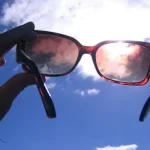
- Wear proper sunglasses:
You should choose sunglasses that block 99–100% of UVA and UVB; this should be clearly written on the label.
Wraparound styles reduce light from the sides and help cut UV reaching the eye by more than 60–90% when used with a brimmed hat.
- Use a wide-brimmed hat or umbrella:
You should use a dark, broad-brimmed hat that can reduce UV exposure to the eyes by around 50%.
- Choose UV-protective prescription lenses or contact lenses:
A normal person wouldn’t know this but many clear spectacle lenses now come with built-in UV blocking.
Some contact lenses also add UV protection, but they do not cover the whole eye, so they should never replace sunglasses.
- Avoid peak UV time when possible:
This suggestion is not practicable for a large section of the society, but for information purposes, UV is strongest between 10 a.m. and 4 p.m.; so try to use shade, hats and sunglasses during these hours, especially in summer.
- Remember protection in all seasons:
The most important piece of advice is to remember that UV exposure is not only a “summer” or “hot weather” problem; winter sun, high-altitude trips and overcast days can still expose you to high UV levels.
The Role of Regular Eye Exams in Early Detection
Regular eye exams are like a health check for the inside of your eyes. They allow doctors to pick up cataracts and other UV-related conditions before they cause major vision loss.
During a comprehensive eye exam, your eye doctor will:
- Check your vision with and without glasses.
- Examine the lens, cornea and retina with a slit lamp and after dilating your pupils.
- Look for early cataract changes, pterygium, pinguecula and signs of macular degeneration.
How Often Should You Have an Eye Exam?
These are general recommendations; your doctor will advise more frequent checks if you have extra risks:
- Children and adults under 40: Every 2 years if no symptoms and no major risk factors.
- 40 to 60 years: About every 1–2 years.
- Above 60 years, or with diabetes / high UV exposure / steroid use: Every year or as advised.
Cataracts and Kids: What Parents Need to Know
Cataracts are more common in older adults, but children are not completely safe.
Their lenses are clearer and allow more UV to reach deeper structures, so the same sun that tans their skin is also passing more energy into their eyes.
While true pediatric cataracts are still relatively rare, high lifetime UV exposure from childhood increases the total dose the lens receives, which can contribute to earlier cataract formation later in life.
Tips for Parents
Below are the tips for parents to protect their children eyes from UV rays:
- Start sunglass habits early:
Let children pick comfortable, shatterproof frames that block 100% UVA and UVB; just make it part of their “outdoor kit” like shoes and mosquito repellent.
- Add hats and shade:
Please encourage caps or wide-brimmed hats during their daily outdoor activities like sports, picnics and beach trips.
- Teach “sun rules”:
Explain to your children that the same sun that burns skin can also quietly damage eyes over time, so protection is as important as sunscreen.
If you educate them early, there is a higher chance of them being cautious on their own.
- Do regular eye checks:
If your child squints, sits too close to screens, or complains of headaches or blurred vision, get them examined rather than waiting.
Busting the Biggest Myths
Let’s clear a few common misunderstandings about UV rays and cataracts:
- Myth: Only direct sunlight damages the eyes.
Fact: UV rays reflect off water, sand, concrete and snow; you can get significant exposure even in shade or under an umbrella, and even on cloudy days.
- Myth: Cataracts only happen in very old age.
Fact: Cataracts become more common with age, but heavy sun exposure, smoking, diabetes and steroid use can bring them earlier, sometimes in the 40s or 50s.
- Myth: Any dark sunglasses are good enough.
Fact: Dark tint without UV protection is dangerous because the pupils open wider behind the dark lens, allowing more UV into the eye if the lens does not block it.
Always look for “99–100% UVA/UVB” or “UV400” labels.
Conclusion
Ultraviolet light is not something we can see or feel directly, but over many years it can quietly damage the lens and increase the risk of cataracts, especially the cortical and posterior subcapsular types.
The good news is that simple habits like proper UV-blocking sunglasses, hats, sensible sun timing, healthy diet and regular eye exams can significantly cut this risk and delay cataract formation.
Cataract itself is highly treatable with modern surgery once it affects daily life, but prevention and early detection are always better than waiting until vision is severely blurred.
With a little awareness and everyday protection, you can continue to enjoy sunlight while keeping your eyes as safe and clear as possible.
FAQs
Can UV rays cause cataracts?
Yes, long-term exposure of UV rays can cause cortical and some posterior subcapsular cataracts by gradually damaging the proteins in the lens.
How much sun exposure is “too much” for cataracts?
There is no exact daily cut-off for sun exposure, but many years of frequent, unprotected exposure, especially between 10 a.m. and 4 p.m., at high altitudes or around reflective surfaces adds up and increases your cataract risk.
What type of UV light is most linked to cataracts?
UVB is the main type of UV light most linked to cataracts, particularly cortical cataracts, although UVA also contributes to aging changes inside the eye.
Can good sunglasses really prevent cataracts?
Yes, good-quality sunglasses that block 99–100% of UVA and UVB can really prevent cataracts, especially when combined with a wide-brimmed hat.
All this can reduce the amount of UV reaching your eyes by more than half, and over a lifetime this can meaningfully lower your risk of UV-related cataracts.
Do I need eye protection on cloudy days or in winter?
Yes, you need eye protection even on cloudy days or in winter because a large share of UV rays can pass through clouds and reflect off snow, water and light surfaces, ultimately penetrating your healthy eyes and causing cataracts in the long term.