Mature vs Immature Cataract - Understanding the Differences
- By Centre For Sight
- 6 minutes
Blog Summary
- Immature cataract = early stage: lens is partly cloudy; blur and glare are mild to moderate.
- Mature cataract = advanced stage: lens is mostly or fully cloudy; vision is much worse, and daily tasks get hard.
- Symptoms (immature): more night glare/halos, frequent glasses changes, faded colours.
- Symptoms (mature): very poor vision, strong glare, colours washed out; the pupil may look white.
- How doctors confirm it: a slit-lamp exam with dilated pupils, a vision chart, and glare tests.
- Treatment approach: early stages can be managed with new glasses, brighter light, and anti-glare tips.
- When surgery is advised: when vision limits reading, driving (especially at night), work, or safety, or when cataracts are mature or fast-worsening.
- Why not wait too long: very advanced lenses can raise eye pressure, cause inflammation, and make it harder to examine the retina.
- Simple rule: if cataracts start to hold you back, talk to your eye doctor about timing.
Cataracts are a leading cause of vision impairment, particularly among older adults. They develop when the eye's lens becomes progressively cloudy, leading to a decline in visual clarity. Cataracts can be classified based on their maturity, with two primary types: mature cataracts vs immature cataracts. Understanding the differences between them is essential for timely diagnosis and appropriate treatment.
What is a Cataract and Different Types?
A cataract is an eye condition in which the eye's clear lens becomes cloudy and blocks light. This leads to blurry vision, glare from lights, and trouble seeing at night. Cataracts usually form slowly with age, but diabetes, UV exposure, long-term steroids, eye injuries, and family history can speed things up.
If you're hearing terms like immature (early) and mature (advanced), they describe how far the cataract has progressed.
Knowing the stage helps your doctor plan the right timing and treatment.
| Type | Where it starts / what it means | Common signs you notice |
| Immature cataract | Early stage; lens is partly cloudy | Mild blur, more glare at night, frequent glasses changes |
| Mature cataract | Advanced stage; lens mostly/fully cloudy (can look white) | Big drop in vision, strong glare, daily tasks become hard |
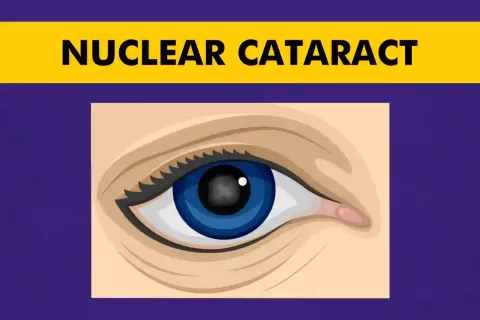
| Nuclear cataract | Center (nucleus) of the lens | Gradual yellowing, distance vision worsens; sometimes temporary near vision improves (myopic shift) |
| Cortical cataract | Outer rim of lens; spreads inward like:spokes | Glare/halos, night driving trouble, contrast loss |
| Posterior subcapsular (PSC) | Back of the lens, just under the capsule | Fast glare in bright light, near vision worse, reading difficulty |
What Is an Immature Cataract?
An immature cataract is an early-stage cataract where the lens still retains some transparency. At this stage, the cataract has started forming, but light can still pass through, allowing partial vision.
Characteristics of an Immature Cataract
- Partial Lens Opacity: Some areas of the lens remain clear, allowing limited light to pass through.
- Functional Vision Retained: Although vision is affected, most daily activities can still be performed.
- Blurry or Foggy Vision: Objects may appear slightly hazy or out of focus.
- Glare Sensitivity: Increased discomfort in bright light conditions.
- Frequent Prescription Changes: Glasses or contact lenses may need adjustments frequently.
Causes of an Immature Cataract
- Aging: The most common cause of cataract development.
- Diabetes Mellitus: High blood sugar levels can accelerate cataract formation.
- UV Radiation Exposure: Prolonged exposure to sunlight can contribute to cataract progression.
- Smoking and Alcohol Consumption: These lifestyle factors can increase the risk of cataract development.
- Eye Trauma or Injury: Past injuries may trigger early cataract formation.
- Prolonged Use of Corticosteroids: Certain medications can promote cataract growth over time.
What Is a Mature Cataract
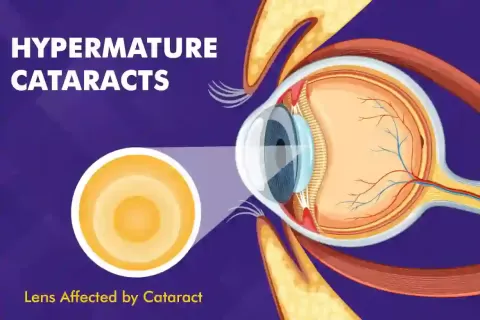
A mature cataract represents an advanced stage of cataract development where the entire lens becomes opaque. At this stage, vision is severely affected, and surgical intervention is often necessary.
Characteristics of a Mature Cataract
- Complete Lens Opacity: The entire lens becomes cloudy, blocking all incoming light.
- Significant Vision Loss: Severe impairment or blindness in the affected eye.
- White or Grayish Discoloration: The lens may appear noticeably cloudy when examined.
- Absence of Red Reflex: A red reflex is typically observed in a healthy eye; its absence indicates full cataract maturation.
Causes of a Mature Cataract
- Untreated Immature Cataract: If left untreated, an immature cataract can progress to a mature stage.
- Chronic Health Conditions: Conditions such as diabetes can accelerate cataract maturation.
- Severe Eye Trauma: Injury to the eye can trigger rapid cataract progression.
- Prolonged Radiation or Toxin Exposure: Certain environmental factors can lead to early cataract development.
Mature Cataract and Immature Cataract Differences
Clinical Examination
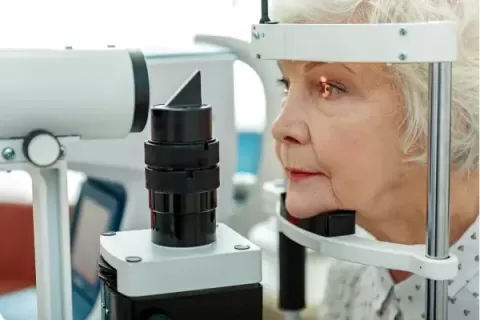
An ophthalmologist can differentiate between mature and immature cataracts using specialized diagnostic tools such as a slit-lamp examination, which allows for a detailed assessment of the lens.
Visual Symptoms
| Feature | Immature Cataract | Mature Cataract |
| Lens Opacity | Partial | Complete |
| Vision | Blurry but functional | Severe vision impairment or blindness |
| Light Sensitivity | High | Limited to light perception |
| Color Perception | Reduced clarity | Difficult to perceive. Limited visual perception. |
| Red Reflex | Present but weak | Absent |
| Surgery Requirement | Not always necessary, recommended when vision reduction impacts daily activities | Usually required |
Diagnostic Methods
- Visual Acuity Test: Measures how clearly the patient can see.
- Slit-Lamp Examination: Uses a high-intensity light to examine the eye structure.
- Retinal Examination: Assesses whether the cataract has fully matured and if the retina is healthy.
Treatment Options for Cataracts
Management of an Immature Cataract
- Regular Eye Checkups: Monitoring progression to determine the right time for treatment.
- Updated Prescription Glasses: Can temporarily improve vision clarity.
- Lifestyle Changes: Reducing smoking, managing diabetes, and wearing UV-protective sunglasses.
- Improving Lighting Conditions: Bright, well-lit environments can enhance vision.
Treatment for a Mature Cataract
The only effective treatment for a mature cataract is cataract surgery, which involves removing the opaque lens and replacing it with an artificial intraocular lens (IOL). The two primary surgical techniques are:
- Phacoemulsification: A small incision is made, and ultrasound waves are used to break up the cataract for removal.
- Extracapsular Cataract Extraction (ECCE): A larger portion of the lens is removed manually, suitable for highly advanced cataracts.
When Is Surgery Recommended?
- When vision loss interferes with daily life.
- If the cataract has fully matured.
- When secondary complications, such as inflammation or glaucoma, arise.
Risks of Delaying Cataract Treatment
- Progressive Vision Loss: Eventually leading to blindness in the affected eye.
- Increased Risk of Falls and Accidents: Poor vision can cause mobility issues.
- Complications in Surgery: The longer a cataract remains untreated, the harder and riskier the surgery becomes.
- Potential for Secondary Eye Diseases: Advanced cataracts may contribute to conditions like glaucoma.
Start protecting your vision today with regular eye checkups. Book an Eye Consultation
FAQs
What is the difference between mature and immature cataract?
The main difference between mature and immature cataracts is the stage of development. Immature cataracts are characterized by a cloudy lens that still allows some light to pass through, causing partial vision impairment. Mature cataracts, on the other hand, have a completely opaque lens, resulting in significant vision impairment.
How do the symptoms of mature and immature cataracts differ?
The symptoms of mature cataracts are more severe compared to immature cataracts. Mature cataracts can cause complete loss of vision if left untreated, whereas immature cataracts may only cause partial vision impairment.
Can mature and immature cataracts be treated differently?
Treatment for both is surgery. However, surgery for immature cataracts in very early stages may be defended till the time it begins to impact daily activities.
What is the difference between early cataracts and mature cataracts?
The main difference between mature and immature cataracts is the stage of development. Immature cataracts are characterized by a cloudy lens that still allows some light to pass through, causing partial vision impairment. Mature cataracts, on the other hand, have a completely opaque lens, resulting in significant vision impairment.
What is the difference between mature and immature cataract iris shadow?
The difference between mature and immature cataract lies in the level of lens opacity.
What is the difference between mature and immature cataracts?
An immature cataract allows some light to pass through, preserving partial vision, whereas a mature cataract causes complete lens opacity and severe vision loss.
How to differentiate mature and immature cataracts?
An immature cataract presents as partial clouding with some retained vision, while a mature cataract results in total lens opacity and severe vision loss. A clinical eye exam confirms the diagnosis.
Can an immature cataract be reversed?
No, but its progression can be slowed with proper eye care, diet, and avoiding risk factors like UV exposure and smoking.
Is cataract surgery necessary for an immature cataract?
Not always. If vision is still functional, an eye specialist may recommend monitoring rather than immediate surgery. Surgery becomes necessary when the cataract progresses and impairs daily life.
What happens if a mature cataract is left untreated?
An untreated mature cataract can lead to complete blindness in the affected eye and may contribute to complications such as glaucoma or inflammation.

Could not find what you are looking for?


