Contact Lenses vs Glasses: Which Is Better for Daily Use?
- By Centre For Sight
- 5 minutes
Blog Summary
- There is no one-size-fits-all answer in the contact lenses vs glasses debate; the right choice depends on your lifestyle, comfort, and eye health.
- Glasses are low-maintenance, cost-effective, and generally safer for everyday use.
- Contact lenses offer greater convenience, a wider field of vision, and improved aesthetics.
- Poor lens hygiene can increase the risk of eye infections and irritation.
- Glasses are often more suitable for prolonged screen use, especially when equipped with blue-light filtering lenses.
- Dust, pollution, air-conditioned environments, and dry weather can make contact lens wear less comfortable.
- For many people, a combination approach works best—glasses for daily use and contact lenses for specific occasions.
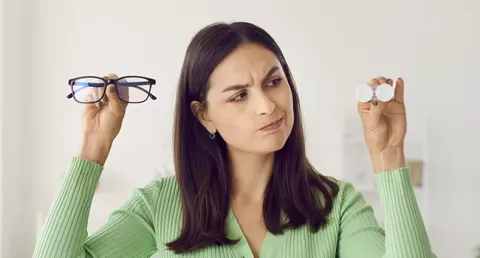
When it comes to vision correction, one of the most common questions people ask is whether they should choose glasses or contact lenses. While both options effectively correct refractive errors, the decision often depends on factors such as comfort, convenience, cost, lifestyle, and long-term eye health.
In this blog, we compare contact lenses and glasses, discuss their advantages and limitations, and help you determine which option best suits your needs.
Understanding Glasses
Glasses are the most traditional and widely used method of vision correction. They sit in front of the eyes and use specially prescribed lenses to focus light correctly onto the retina, providing clear vision.
Modern spectacle lenses are lightweight, durable, and available with advanced coatings such as:
- Anti-glare coating
- Blue-light filtering coating
- UV protection
- Scratch-resistant coating
Types of Glasses
Single-Vision Glasses
- Correct either distance vision or near vision.
Multifocal Glasses
- Correct both near and distance vision.
- Include bifocal, trifocal, and progressive lenses.
Understanding Contact Lenses
Contact lenses are thin, curved lenses that sit directly on the surface of the eye. Because they move with your eyes, they provide a more natural field of vision and unobstructed peripheral vision.
Types of Contact Lenses
- Soft contact lenses (most commonly used and comfortable)
- Rigid Gas Permeable (RGP) lenses (durable and highly effective, though they may require an adjustment period)
Common Contact Lens Options
- Daily disposable lenses
- Bi-weekly lenses
- Monthly replacement lenses
- Extended-wear lenses
- Toric lenses for astigmatism
Pros of Glasses vs Contact Lenses
| Category | Advantages of Glasses | Advantages of Contact Lenses |
| Ease of Use | Easy to wear and remove | Feel natural once adapted to |
| Maintenance | Minimal maintenance | No visible eyewear during use |
| Comfort | No direct contact with the eyes | No pressure on the nose or ears |
| Vision Quality | Provides clear vision | Offers a wider, more natural field of view |
| Lifestyle | Ideal for work and daily activities | Excellent for sports, travel, and active lifestyles |
| Weather Conditions | Suitable for most situations | Do not fog up or collect raindrops |
| Cost | Generally more economical over time | Multiple replacement options available |
| Eye Health | Lower risk of eye infections | Safe when used and maintained correctly |
| Appearance | Wide variety of stylish frames | Invisible and aesthetically appealing |
Cons of Glasses vs Contact Lenses
| Category | Disadvantages of Glasses | Disadvantages of Contact Lenses |
| Ease of Use | May slip, feel heavy, or become uncomfortable | Require practice to insert and remove |
| Maintenance | Can become dirty, scratched, or damaged | Require strict cleaning and hygiene |
| Comfort | Can cause pressure on the nose and ears | May cause dryness or irritation |
| Vision Quality | Peripheral vision may be limited | Vision may blur if the lens shifts position |
| Lifestyle | Less suitable for sports and vigorous activities | Less comfortable in dusty or polluted environments |
| Weather Conditions | Can fog up in humidity or while wearing masks | May dry out in air-conditioned or windy environments |
| Cost | Replacement can be expensive if damaged | Ongoing recurring expense |
| Eye Health | Outdated prescriptions may cause eye strain | Higher infection risk if hygiene is neglected |
| Appearance | Some people dislike wearing spectacles | Not suitable for everyone |
Which Is Better: Contact Lenses or Spectacles?
There is no universal answer to this question. The best choice depends on your visual needs, lifestyle, and eye health.
Many people find that using both glasses and contact lenses offers the greatest flexibility.
Glasses May Be Better If You:
- Spend long hours working on a computer or digital devices
- Prefer a low-maintenance vision correction option
- Have dry eyes or sensitive eyes
- Live in areas with high levels of dust or pollution
- Want a cost-effective long-term solution
Contact Lenses May Be Better If You:
- Participate regularly in sports or fitness activities
- Prefer not to wear glasses
- Attend frequent social or professional events
- Need unrestricted peripheral vision
- Want greater freedom of movement during daily activities
Contact Lenses or Glasses for Daily Use?
Your daily routine plays an important role in determining which option is more suitable.
For example:
- A corporate professional who spends 8–10 hours working on a computer may benefit more from glasses with anti-glare and blue-light filtering lenses.
- A student, athlete, or fitness enthusiast may prefer contact lenses for their convenience and unobstructed vision.
However, many eye care specialists recommend:
- Using glasses as the primary mode of vision correction.
- Wearing contact lenses when needed for sports, travel, social occasions, or special events.
This balanced approach can provide convenience while minimising the risk of dryness, irritation, and contact lens-related infections.
Conclusion
The choice between contact lenses and glasses ultimately depends on your personal preferences, lifestyle, and eye health needs.
If you prioritise convenience, safety, affordability, and low maintenance, glasses are generally the better option for daily use. If you value aesthetics, flexibility, and unrestricted vision, contact lenses may be the ideal choice.
For many individuals, the most practical solution is not choosing one over the other but using both strategically based on different situations and activities.
Frequently Asked Questions
Can I switch between glasses and contact lenses?
Is it safe to wear contact lenses every day?
Do contact lenses damage your eyes?
Are glasses better for eye health?
Which is better for daily use: contact lenses or glasses?
Can teenagers wear contact lenses?
What are the disadvantages of contact lenses compared to glasses?
Do contact lenses worsen eyesight over time?
Can I wear contact lenses for long hours?
Related Blogs
Could not find what you are looking for?


