Cataract: Myths, Facts and Treatment: A Doctor's Perspective
- By Centre For Sight
- 9 minutes
Blog Summary
- A cataract is age-related clouding of the eye's natural lens that causes gradually blurred, cloudy vision, glare, poor night vision, faded colours, and frequent glasses changes.
- Main causes are ageing plus factors like diabetes, long-term steroid use, smoking, heavy alcohol use, and UV-B exposure, along with genetics and lifestyle over many years.
- Myth: Close work (reading/TV) causes cataract
Fact: It increases eye strain and makes blur more noticeable, but it does not cause cataracts. - Myth: Cataracts can be cured with drops, tablets, or diet
Fact: No medicine or diet can reverse an established cataract; the only effective treatment for visually significant cataract is surgery to remove the cloudy lens and insert an artificial lens (IOL). - Myth: Cataract must be ?ripe? or very mature before surgery
Fact: With modern techniques, waiting too long can make surgery harder and riskier; today, surgery is advised when cataract interferes with daily activities or eye health. - Myth: Cataract surgery is very painful and needs long bed rest
Fact: Modern small-incision phaco surgery is done with numbing drops, usually painless, takes a short time, and most patients go home the same day and resume light activities quickly. - Myth: Cataract comes back after surgery
Fact: Once the natural lens is removed, that cataract cannot return. Later clouding of the lens capsule (PCO / ?secondary cataract?) is treated in a few minutes with a simple YAG laser, not repeat surgery. - Modern cataract surgery facts: tiny 2?2.8 mm incision, ultrasound to break and remove the cloudy lens, foldable IOL implantation, usually no stitches, and vision improving over days to weeks in most patients.
- The ?right time? for surgery is when cataract blur and glare start affecting driving, reading, work, hobbies, or independence, and your eye doctor confirms cataract is the main cause of poor vision.
?Of all the senses, sight must be most beautiful.? This line from Helen Keller reminds us how precious our eyes really are.
Many people live with blurred, cloudy vision for years because they are afraid of cataract surgery myths they have heard from friends and relatives. The problem is that these myths hide the real cataract facts, delay treatment, and keep patients from enjoying clear, comfortable vision again.?
In this blog, we'll separate cataract myths from reality, share honest cataract surgery facts, and walk you through how modern treatment actually works so you can decide with confidence.
What Is a Cataract?
Inside your eye, just behind the coloured part (iris), there is a clear structure called the crystalline lens. In a young, healthy eye, this lens is soft and transparent, and it changes shape to focus on far and near objects (like a camera lens).
With age, the lens becomes harder and less flexible, and then it starts to lose its transparency by developing cloudy patches inside. This clouding of the natural lens is called a cataract.?
Globally, cataract is still the leading cause of blindness, responsible for around 40?50% of blindness cases, even though surgery can restore vision.
Causes: Cataract Facts
Age is the most important risk factor, but there are other well-known cataract facts that matter. You can think of cataract as the end result of age + genetics + lifestyle + medical conditions acting on the lens over many years.
- Ageing:
The most common cause is the natural wear and tear of lens proteins with time. Most people above 60 years have some degree of cataract, even if they are not yet aware of it.
- Diabetes:
In diabetes, high blood sugar changes the lens metabolism and speeds up cataract formation at a younger age.
- Steroid use:
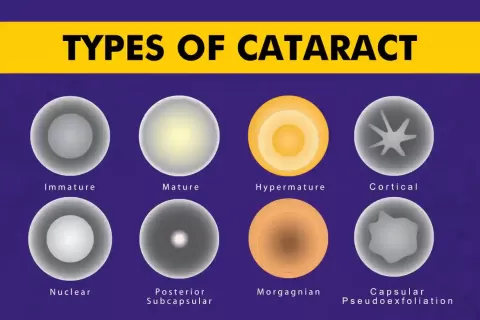
The long-term use of steroid tablets, inhalers or eye drops can lead to posterior subcapsular cataracts, a specific type that affects near vision and causes glare.
- Smoking and alcohol:
Even passive smoking is strongly linked with earlier and denser cataracts, and heavy alcohol use also increases the risk of multiple conditions, including cataracts.
- UV light exposure:
This might not be on the top of the list, but long-term unprotected exposure to sunlight (UV-B especially) increases the risk of cortical cataracts, especially in outdoor workers.
Symptoms: Cataract Facts
In the early stage, cataracts do not cause any obvious problems. But as it progresses, people notice the following symptoms:
- Blurred or cloudy vision:
The people affected describe it like looking through a dirty or foggy glass; they try to wipe their glasses again and again but still see blur.
- Increased sensitivity to light and glare:
The people struggling describe that headlights, sunlight, and bright indoor lights cause them discomfort or they see halos.?
- Poor night vision:
People struggle with night driving as it becomes difficult as they struggle in dim light or at dusk, and after some time, night vision gets worse.
- Colours look faded or yellowish:
People struggle with how whites look cream; and bright colours lose their ?pop?.
- Frequent change in glasses:
People keep changing their prescription but are never fully satisfied as their vision is constantly changing.
- Double vision in one eye
Sometimes people notice cataracts cause ?ghost images? or double vision in a single eye. It can be very frustrating and depressing for the individuals.
Cataract Myths vs Facts
Here we'll solve some very common cataract myths and set them against the real cataract facts, so you can see clearly where the confusion comes from.
Myth 1: ?Reading, TV or doing work close to the eyes causes cataract.?
- Fact: Close work can cause eye strain, but it does not directly cause cataracts.
This myth is very popular because people notice cataract symptoms more when reading or doing detailed work as they need sharp focus, so they blame the activity instead of the underlying lens change.
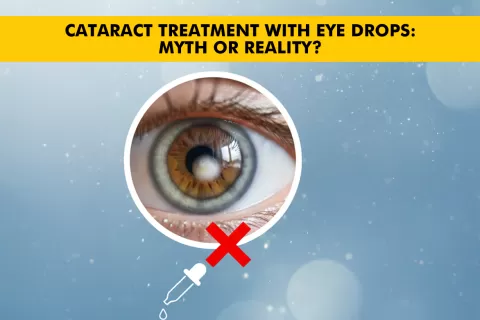
Myth 2: ?Cataracts can be cured with medicines, eye drops, or diet.?
- Fact: According to all major eye science bodies and eye hospitals networks like the American Academy of Ophthalmology and Center for Sight, no eye drop, tablet, or diet has been proven to reverse an established cataract.?
The only effective treatment for a visually significant cataract is surgery to remove the cloudy lens and replace it with an artificial one.
A healthy lifestyle with no smoking, good sugar control, UV protection, and good nutrition slow cataract progression, but it cannot ?melt? or remove it once formed.
Myth 3: ?Cataract must be ?ripe' or very mature before surgery.?
- Fact: This is an old idea from the time when surgery techniques were less advanced. Today, waiting until cataract is very advanced actually makes surgery more difficult and risky.
Modern cataract surgery is advised when cataract is affecting your daily activities (driving, reading, work), or your doctor feels that waiting further will harm your eye health or make surgery harder later.
Myth 4: ?Cataract surgery is very painful and you need long bed rest.?
- Fact: With modern small-incision phacoemulsification, surgeons use eye-drop anaesthesia so you feel mild pressure but not pain and most patients go home the same day and can do light activities the next day.
So one of the big cataract surgery myths is that you will be bedridden for weeks; this is no longer true with current techniques.
Myth 5: ?If I have cataract surgery, the cataract can come back.?
- Fact: Once the natural lens is removed, that cataract cannot grow back, because the cloudy lens is gone.
However, months or years later, the thin capsule that holds the artificial lens can become cloudy. This is called a posterior capsular opacification (PCO) or ?secondary cataract?. PCO is treated in a few minutes with a simple YAG laser procedure done in the clinic, not a repeat surgery.
Treatment Options: Cataract Surgery Facts
There is no medicine to erase cataracts, but not everyone needs surgery immediately.?
Realistic cataract surgery facts look like this:
Early cataract (mild symptoms)
In early cataracts with mild symptoms, vision can be improved for a period of time with new glasses, better lighting, and anti-glare coatings on lenses.
When is cataract surgery advised?
Your doctor suggests` surgery when:
- You cannot see well enough to do your job, drive safely, or enjoy daily activities.
- You have difficulty with strong light or glare that causes significant discomfort.
- The cataract is making it difficult to check or manage other eye diseases (for example, diabetic retinopathy).
Modern cataract surgery procedure
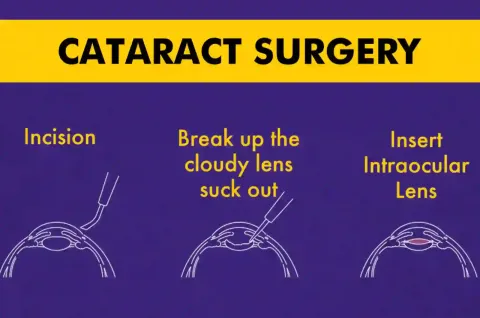
Most centres use phacoemulsification (phaco) with a foldable intraocular lens (IOL):
- Anaesthesia: Your surgery team will pour numbing eye drops +/- or a small local injection; so you stay awake but relaxed with no pain and only mild pressure for a few seconds.
- Tiny incision: A very small cut, about 2-2.8 mm, is made at the edge of the cornea.
- Removing the cloudy lens: The surgeon then opens the front of the lens capsule and uses an ultrasound probe to break the cataract into tiny pieces and suck them out.
- Placing the artificial lens (IOL): A clear, foldable intraocular lens is inserted into the remaining lens capsule, depending on your requirements.
- No stitches in most cases: The small incision is self-sealing; a bandage is not needed after the first day. Most patients notice much clearer vision within a few days, with further fine improvement over 2?4 weeks. Serious complications are rare when surgery is done at the right time in a healthy eye.
Conclusion
To put it simply, a cataract is a normal age-related change in the lens, but the fear around it is driven by old stories and half-truths. Knowing the real cataract facts helps you see through common cataract myths, especially about surgery being dangerous or requiring long bed rest.?
Modern cataract surgery is one of the safest and most successful operations in medicine, and for most people, it can restore clear, bright vision and improve quality of life dramatically.?
If you or a family member are living with blur, glare or poor night vision because of cataract, the best step is a detailed eye check and an honest discussion with your surgeon rather than waiting in fear.
Frequently Asked Questions
Is cataract only a disease of old age?
Can I prevent cataracts completely?
Is cataract surgery 100% safe?
Will I still need glasses after cataract surgery?
How do I know when it is the right time for cataract surgery?

Could not find what you are looking for?


