Can Astigmatism Be Cured by LASIK?
- By Centre For Sight
- 5 minutes
Blog Summary
- Astigmatism (cylindrical power) happens when the cornea or lens is unevenly curved, making vision blurred or stretched at all distances and causing eye strain and headaches.?
- LASIK can correct astigmatism in most mild?moderate cases by reshaping the cornea with a laser so that light focuses properly on the retina.?
- During LASIK for cylindrical power, a thin flap is created, the cornea is reshaped with an excimer laser, and the flap is repositioned, resulting in a significant and often long-term reduction in dependence on glasses or contact lenses, with relatively quick visual recovery in most patients.?
- Ideal LASIK candidates are 18+ with stable vision, mild?moderate astigmatism (up to ~6D), healthy and adequately thick corneas, and no conditions like keratoconus or severe dry eye.?
- People with very high cylindrical power, thin/scarred corneas, or unstable vision are? not suitable for LASIK and should avoid it until fully evaluated.?
- Alternatives to LASIK for astigmatism include SMILE, PRK, and toric IOLs during cataract surgery, each chosen based on age, corneal health, power range, and lifestyle.?
- A comprehensive eye check-up with an ophthalmologist is essential to confirm eligibility, discuss risks, and decide whether LASIK or another procedure is the safest way to correct cylindrical power.
Astigmatism is a very common eyesight issue that makes objects look blurry or stretched. It happens when the front part of the eye (the cornea) or the lens inside the eye is not perfectly round.?Because of this uneven shape, light does not focus properly on the retina, and vision becomes unclear.?Glasses and contact lenses can help correct this problem, but they are not permanent solutions.
That's why many people look for long-lasting options like LASIK. LASIK is a modern laser eye surgery that reshapes the cornea so light focuses correctly, helping to reduce or even remove cylindrical power. In this blog, we'll look at how LASIK helps in treating astigmatism, how effective it is, and whether it could be the right choice for you.
What is Astigmatism?
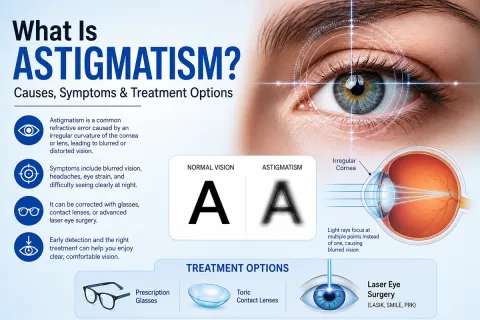
Astigmatism is a refractive error caused by an irregular curvature of the cornea or lens. Cylindrical power is another name for astigmatism. The cornea and lens are symmetrically curved in a perfectly shaped eye, allowing light to focus directly on the retina. In astigmatism, the uneven shape causes light to focus at multiple points, resulting in blurred or distorted vision.
Symptoms of Astigmatism:
- Blurred or distorted vision at all distances.
- Eye strain or discomfort.
- Frequent headaches.
- Difficulty seeing at night.
Astigmatism often coexists with other refractive errors like myopia (nearsightedness) or hyperopia (farsightedness).
Can LASIK Cure Astigmatism?
The answer is ?YES?. LASIK can cure astigmatism in most cases. LASIK can cure astigmatism in most cases. LASIK (Laser-Assisted In Situ Keratomileusis) is a popular and highly effective refractive surgery that reshapes the cornea to correct vision problems, including astigmatism.
Using a precise laser, LASIK smooths out the irregular curvature of the cornea, allowing light to focus properly on the retina. This eliminates or significantly reduces the effects of astigmatism.
How Does LASIK for Cylindrical Power Work?
LASIK involves the following steps:
- Creating a Corneal Flap: A thin, hinged flap is created on the cornea's surface using a femtosecond laser.
- Reshaping the Cornea: An excimer laser removes microscopic layers of corneal tissue to correct its shape and address astigmatism.
- Repositioning the Flap: The corneal flap is placed back in position, where it naturally adheres without the need for stitches.
By reshaping the cornea, LASIK eye surgery ensures that light focuses accurately on the retina, improving vision clarity.
Benefits of LASIK for Cylindrical Power
- Reduces or eliminates the need for glasses or contact lenses.
- Provides long-term correction for astigmatism.
- Offers quick recovery with minimal downtime.
Ideal Candidates for LASIK
While LASIK is a highly effective solution for astigmatism, not everyone is a suitable candidate. Here are some factors to consider:
- Age 18 or older with stable vision for at least a year.
- Mild to moderate astigmatism (up to 6 diopters).
- Healthy corneas with sufficient thickness.
- No underlying eye conditions like keratoconus or severe dry eyes.
Who Should Avoid LASIK?
- Individuals with very high cylindrical power beyond the safe limits of LASIK correction.
- Those with corneal scarring or thin corneas.
- Pregnant or breastfeeding individuals, as hormonal changes can affect vision stability.
A comprehensive evaluation by an ophthalmologist can determine your eligibility for LASIK.
Alternatives to LASIK for Astigmatism
If you're not a candidate for LASIK, other procedures can address cylindrical power and astigmatism.
SMILE (Small Incision Lenticule Extraction)
SMILE?is a minimally invasive laser surgery designed to treat myopia and mild astigmatism. Unlike LASIK, it uses a smaller incision, typically 2?4 millimetres, making it less invasive.
How It Works?
A femtosecond laser creates a small lens-shaped piece of tissue (lenticule) in the cornea, which is removed to reshape the cornea and correct refractive errors.
Benefits:
- Reduced risk of dry eyes.
- Faster recovery time.
- Suitable for individuals with thinner corneas.
PRK (Photorefractive Keratectomy)
PRK is a laser-based procedure that doesn't involve creating a corneal flap, making it ideal for individuals with thin or irregular corneas.
How It Works:
The outer layer of the cornea (epithelium) is removed, and an excimer laser reshapes the cornea. The epithelium naturally regenerates over a few days.
Benefits:
- No flap-related complications.
- Effective for correcting astigmatism and other refractive errors.
- Reliable alternative for those not eligible for LASIK.
Toric Intraocular Lenses (IOLs)
Toric IOLs are specialised lenses implanted during cataract surgery to correct astigmatism while addressing cataracts.
How It Works:
During cataract surgery, the clouded lens is replaced with a toric lens designed to correct the cornea's irregular shape.
Benefits:
- Dual solution for cataracts and astigmatism.
- Long-term vision correction.
- Ideal for patients ineligible for laser surgery.
Which is Right for You?
Each procedure has unique advantages, and the best option depends on your specific needs, corneal health, and lifestyle. A consultation with an eye specialist can help you determine the most suitable treatment.
Conclusion
Astigmatism is easily manageable, and you don't always have to rely on glasses or contacts forever.?With LASIK, many people enjoy clearer vision and greater freedom in daily life.?
However, the suitability of LASIK depends on your eye health and medical evaluation.?A detailed check-up by an eye specialist will help you understand if LASIK is the best option for correcting your cylindrical power.
Take the first step toward healthier, more beautiful eyes Book an Appointment with Centre for Sight in India!
Frequently Asked Questions
Can LASIK cure astigmatism permanently?
Can cylindrical power be cured by LASIK?
Is LASIK surgery for cylindrical power safe?
What is the success rate of LASIK for astigmatism?

Could not find what you are looking for?


