Is an online Eye Test being better or not?
- By Centre For Sight
- 5 minutes
Summary: Online eye tests offer quick vision checks but lack medical depth. They're great for convenience, not diagnosis?regular professional exams remain essential for detecting hidden eye issues and maintaining long-term visual health..
|
Key Takeaways:
|
Is Doing an Eye Test Online a Smart Move?
In our increasingly digital-first world, it's natural to wonder: ?Can I check my eyesight online?? With apps, websites, and home-based screening tools promising quick results, online eye tests feel like a modern, convenient solution. But are they truly reliable?and what exactly can they tell you?
The short answer is: yes, online eye tests can be useful-but only in specific, limited ways. Let's take a closer, clearer look at what an eye vision test online really offers, where it shines, and where it simply can't replace professional care.
What are Online Vision Tests, and How Do They Work?
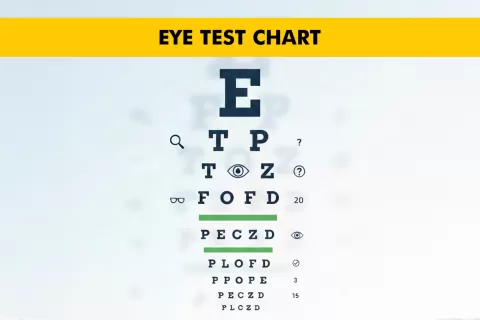
When you ask, ?Is there an online eye test??, it usually means self-administered tools that measure visual acuity or refractive error using a computer or smartphone. These tests check how well you see under controlled conditions, and some even let you input results to get a contact lens or glasses prescription. However, they require proper screen distance, lighting, and careful setup, and they do not assess eye health-such as the retina, optic nerve, or eye pressure.
Most online eye tests work by:
- Displaying letters, numbers, or symbols on your screen
- Asking you to identify them from a set distance
- Measuring your responses against algorithms to estimate your vision
However, these tests rely heavily on ideal user conditions:
- Correct screen distance
- Proper room lighting
- Accurate screen size and calibration
- Careful adherence to instructions
Even small user errors-like sitting too close to the screen-can skew results.
Are Online Eye Tests Accurate?
Some studies/regulatory reviews show promising results, while many experts caution significant limitations.
- A systematic review found that some remote self-administered visual acuity tests had accuracy comparable to clinic tests (e.g., showing a mean difference of ~0.02 logMAR in one tool) when done under controlled conditions.
- Yet mainstream groups such as the American Academy of Ophthalmology (AAO) say: ?An online vision test won't be as accurate or reliable as the exam done by your optometrist.?
- Some optometry sources argue online tests often can't detect eye diseases and ?should never replace? an in-person exam.
So: yes ? they can work reasonably well for certain measures (visual acuity in healthy adults) in controlled settings. But the question ?are online eye tests accurate?? must be answered with ?sometimes, but not generally for full eye health or all ages?.
Pros & Cons of an Eye Test Online
Pros:
- Convenience and speed
Online eye tests can be done anytime, anywhere-no appointments, travel, or waiting rooms required. - Cost-effective for basic checks
They are often cheaper than in-person exams and may help identify whether your vision has changed noticeably. - Useful for interim vision assessments
For adults with a stable prescription and no history of eye disease, online tests may help when renewing glasses or checking vision between routine exams. - Encourages awareness
For some people, digital tools serve as a first step toward taking eye health seriously, prompting timely professional visits.
Cons:
- No assessment of eye health
Good vision does not equal healthy eyes. Serious conditions like glaucoma can progress silently with no impact on vision until advanced stages. - High risk of user error
Distance, lighting, screen glare, and calibration can all affect accuracy-something an in-clinic exam tightly controls. - Not suitable for everyone
Children, seniors, people with high prescriptions, dry eye, eye surgery history, diabetes, or existing eye disease should avoid relying on online tests. - False reassurance
Seeing ?20/20? on a screen can lead to a false sense of security. Many eye diseases develop without reducing visual acuity early on.
Who Might Benefit from Online Vision Tests?
Online eye tests may be reasonable as a supplementary tool if you:
- Are a healthy adult with no known eye conditions
- Have a stable prescription
- Want a quick check before scheduling an in-person exam
- Need a short-term assessment while awaiting professional care
They are not recommended if you experience:
- Frequent headaches
- Eye strain
- Sudden vision changes
- Blurry or double vision
- Eye pain or redness
In these cases, skipping a full exam can delay diagnosis and treatment.
Common Myths About Online Eye Tests
Many people assume online eye tests can fully replace a visit to the eye doctor, but that's a common misconception. While digital tests can check basic visual sharpness, they cannot detect eye diseases like glaucoma, cataracts, or retinal problems. Another myth is that online results are always precise-accuracy often depends on screen size, lighting, and user setup. Some also believe these tests are suitable for everyone; in reality, children, seniors, and people with medical conditions need in-person exams. Online eye tests are helpful screening tools, not complete eye health evaluations.
Conclusion
An eye vision test online offers convenient, quick vision checks, but isn't a full substitute for a professional exam. So, while the answer to ?Is there an online eye test?? is yes, the real question-?Can I fully rely on it??-is not yet. For complete confidence in your vision and eye health, in-person exams remain best.
FAQs
Are online eye tests reliable?
They're fairly reliable for vision checks, but can't assess overall eye health.
Is it possible to do an online eye test?
Yes, several websites and apps offer simple, self-administered online vision tests.
Do online eye vision exams really work?
They work for basic eyesight evaluation, but can't replace comprehensive eye exams.
Are online eye tests safe?
Yes, they're generally safe, but an incorrect setup may affect result accuracy.
Are online eye tests legal?
Yes, they're legal in most regions when used for preliminary vision screening.
Can children take online eye tests?
Online eye tests are not recommended for children, as their vision is still developing and requires detailed assessment by an eye care professional.
Can online eye tests help detect worsening eyesight?
Yes, they can help identify noticeable vision changes, prompting timely visits to an eye doctor for further evaluation.
Are online eye tests suitable for people with existing eye conditions?
No, individuals with diabetes, glaucoma, post-surgery vision, or chronic eye issues should rely only on in-person eye examinations.
Could not find what you are looking for?


