Common Eye Injury: Symptoms, Causes, and Treatment
- By Centre For Sight
- 7 minutes
Table of Contents
- What Is an Eye Injury?
- Types of Eye Injuries
- Open Globe vs Closed Globe Eye Injury
- Common Causes of Eye Injuries
- Diagnosis: How Do Doctors Detect Eye Damage?
- When Should You See a Doctor Immediately?
- How to Prevent Eye Injuries
- Conclusion
- FAQs
What Is an Eye Injury?
An eye injury is any trauma that affects the delicate structures of the eye and surrounding tissues. This can include damage to the:- Eyelid and Orbit: The protective skin and bone structure surrounding the eye.
- Cornea: The clear, dome-shaped front surface.
- Eyeball (Globe): The main structure containing the lens, retina, and vitreous gel.
- Optic Nerve: The nerve that transmits visual information from the retina to the brain.
Types of Eye Injuries?
Eye injuries can happen due to multiple reasons and can be classified based on the mechanism of trauma. An expert eye doctor at Centre For Sight has listed below a few: 1. Mechanical Eye Injuries These are caused by direct physical force to the eye or the surrounding area.- Blunt Force Trauma: An impact from a non-sharp object (e.g., a fist, ball, or airbag). This can cause internal bleeding, swelling, or damage to structures like the iris or retina.
- Penetration Injuries: Caused by a sharp object (e.g., a nail, glass shard, or metal fragment) that enters the eye but does not pass through.
- Eyeball Tear (Laceration/Rupture): A cut or tear through the entire wall of the eyeball (sclera or cornea). This is a severe, vision-threatening emergency, often referred to as a ruptured globe.
- Eyelid Lacerations: Cuts to the eyelid itself. While they may not directly effect the eyeball, they require surgical repair to restore the eyelid's function in protecting the eye.
- Acid Burns: Found in car battery fluid and vinegar. They typically cause damage to the outer layer of the eye (cornea) but are often rapidly neutralised, limiting deeper penetration.
- Alkali Burns: Alkali is always worse than acid. Found in household cleaners (bleach, drain cleaners), lime, and cement. These are far more dangerous because they penetrate the eye tissue quickly, causing progressive, deep-tissue damage.
- Welding Flash (Arc Eye): Intense UV light from welding torches that causes photokeratitis (a painful "sunburn" of the cornea).
- Fireworks: The heat, smoke, and explosive force can cause severe burns, blunt trauma, or penetration injuries.
- UV Exposure: Prolonged, unprotected sun exposure or exposure to tanning lamps can damage the cornea and retina.
- Thermal Burns: Direct contact with hot liquids (splattering oil, boiling water) or flame.
- Surface Foreign Bodies: Dust, sand, or loose eyelashes that come on the surface of the eye. While irritating, they are often flushed out by tears.
- Embedded Foreign Bodies: Metal fragments (from grinding or hammering) or glass that become stuck in the cornea or, worse, penetrate the interior of the eyeball.
- Scratches / Corneal Abrasion: A scratch on the cornea's surface, typically caused by a fingernail, tree branch, or rubbing the eye with a foreign particle present. It causes intense pain and light sensitivity but usually heals quickly.
- Contact Lens Injuries: Improper use, overwearing, or sleeping in contact lenses can lead to corneal abrasions or potentially serious infections like a corneal ulcer.
- Screen Strain (Asthenopia): Discomfort, fatigue, and pain caused by prolonged focusing on digital screens.
- Dry Eye from Digital Exposure: Reduced blinking frequency (often by 50% or more) while focusing on a screen, leading to tear film evaporation and dry, irritated eyes.
- Computer Vision Syndrome (CVS): A collection of eye damage symptoms, including blurred vision, headaches, and neck pain.
Open Globe vs Closed Globe Eye Injury
| Feature | Open Globe Injury | Closed Globe Injury |
| Description | Full-thickness wound/tear to the outer wall of the eyeball | No full-thickness wound |
| Common Cause | Sharp objects, severe blunt force (Eyeball Tear/Rupture) | Blunt trauma (fist, ball), mild scratches, bruises (Contusions) |
| Severity | Vision-Threatening Emergency. Immediate surgery is required. | Typically less severe, though internal damage (retinal detachment) is still possible. |
| Visual Sign | Irregular or peaked pupil | "Black eye" (bruising), subconjunctival hemorrhage |
Common Causes of Eye Injuries
- Workplace Accidents: The most frequent cause, especially in construction, manufacturing, and workshops, where flying debris, chemicals, or welding sparks are present.
- Household Activities: DIY projects (hammering, drilling), cleaning with harsh chemicals, yard work (mowing, trimming), and cooking (hot oil splatter). Home injuries account for almost half of all cases.
- Sports Injuries: Contact sports (boxing, basketball), racquet sports (squash, badminton), and sports involving high-speed projectiles (paintball, baseball).
- Road Traffic Accidents: Airbag deployment, shattered glass, or direct impact trauma.
- Explosions and Fireworks: Causing thermal burns, blunt force, and embedded foreign objects.
- Violence and Assault: Direct blows to the face or eye area.
- Children and Toys: Accidents involving stick-like objects, toys with projectiles, or accidental pokes.
Diagnosis: How Do Doctors Detect Eye Damage?
- Vision Test: Checking visual acuity (reading the eye chart).
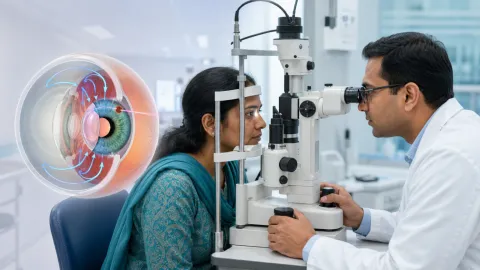
- Slit Lamp Examination: Using a high-powered microscope to thoroughly inspect the eyelids, cornea, conjunctiva, iris, and lens. A special dye (Fluorescein) may be used to highlight abrasions.
- Lid Inspection & Pupil Response: Checking for hidden lacerations and assessing how the pupil reacts to light, which can reveal nerve or internal damage.
- Intraocular Pressure (IOP) Measurement: Assessing the pressure inside the eye, which can be dangerously high or low following trauma.
When Should You See a Doctor Immediately?
Your sight is too valuable to risk. If in doubt, always seek immediate care. You should go to an emergency room or see an ophthalmologist immediately if you experience:- Vision Loss or Sudden Blur: Any noticeable decline in sight.
- Blood or Discharge: Bleeding in the eye, or thick/pussy discharge.
- Eyeball Tear/Cut: A visible wound on the eyeball or surrounding tissue.
- Persistent Pain: Pain that is severe or continues for more than 24 hours.
- Object Stuck: Any foreign object embedded in the eye.
- Child Eye Injury: All eye injuries in children must be evaluated immediately.
- Chemical Exposure: After flushing for 15-20 minutes, you must see a doctor to check for residual eyeball damage.
How to Prevent Eye Injuries
The vast majority of serious eye injuries are preventable. It often comes down to one simple step: wearing appropriate protective eyewear.- At Work: Always wear government-approved safety glasses with side shields, especially when grinding, drilling, hammering, working with chemicals, or welding. Identify flying debris, chemical splash, or optical radiation risks in your environment.
- During Sports: Use sport-specific protective goggles with polycarbonate lenses for high-risk activities like racquet sports, basketball, and baseball. Regular glasses offer no protection and can shatter, causing more eye damage.
When Should You See a Doctor Immediately?
You should go to an emergency room or see an ophthalmologist immediately if you experience:- Vision Loss or Sudden Blur: Any noticeable decline in sight.
- Blood or Discharge: Bleeding in the eye, or thick/pussy discharge.
- Eyeball Tear/Cut: A visible wound on the eyeball or surrounding tissue.
- Persistent Pain: Pain that is severe or continues for more than 24 hours.
- Object Stuck: Any foreign object embedded in the eye.
- Child Eye Injury: All eye injuries in children must be evaluated immediately.
- Chemical Exposure: After flushing for 15-20 minutes, you must see a doctor to check for residual eyeball damage.
Conclusion
Even a minor eye injury can be dangerous and lead to permanent eye damage if complications like infection set in. Never ignore sudden blurred vision, double vision, or a loss of sight, seek immediate care. Protective eyewear prevents an estimated 90% of serious eyeball injuries. Delayed treatment dramatically increases the risk of infection, retinal detachment, and permanent vision loss.
Could not find what you are looking for?


