

Key Takeaways:
|
Summer brings bright sunshine, outdoor activities, and longer days, but it can also create several challenges for your eyes. Rising temperatures, dust, pollution, and intense sunlight can increase the risk of irritation, infections, and dryness. Following proper summer eye care practices is essential to maintain healthy and comfortable vision during the hotter months.
While many people focus on protecting their skin from the sun, the eyes are equally sensitive to heat, ultraviolet (UV) radiation, and environmental pollutants. Adopting a few preventive measures and simple summer eye care habits can significantly reduce the risk of discomfort and long-term eye damage.
Why Eye Care During Summer Is Important
Summer conditions can place extra stress on the eyes. Increased heat, dry air, and prolonged sun exposure can make individuals more vulnerable to several eye problems.
The combination of heat, dust, and pollution may trigger allergies and irritation, causing symptoms such as redness, itching, watering, and burning sensations. Practicing proper eye care during summer helps reduce these risks and protects the delicate surface of the eyes.
Simple preventive measures such as:
- Washing the eyes with clean water
- Wearing UV-protective sunglasses
- Using lubricating eye drops when advised by an eye specialist
- Maintaining proper eye hygiene
can go a long way in preventing common summer eye problems.
Common Eye Problems During Summer
Several eye conditions become more common during the summer season and may cause discomfort if not managed promptly.
Conjunctivitis (Pink Eye)
Conjunctivitis, commonly known as pink eye, is more frequently seen during the summer months. It is an infection or inflammation of the conjunctiva, the thin transparent layer covering the white part of the eye.
Common symptoms include:
- Redness
- Excessive watering
- Burning or pricking sensation
- Sticky eye discharge
If these symptoms occur, it is important to seek medical advice early to prevent the infection from spreading. Good hygiene and avoiding touching or rubbing the eyes are important preventive measures.
Dry Eye Syndrome
Dry eye syndrome is another common problem during hot weather. High temperatures, dehydration, air conditioning, and prolonged screen use can cause the tear film to evaporate more quickly.
Symptoms may include:
- Burning sensation
- Eye irritation
- Blurred vision
- Grittiness or dryness
Using lubricating eye drops recommended by an eye specialist can help maintain eye moisture and improve comfort. Staying hydrated and taking regular screen breaks are also effective preventive measures.
Pterygium (Surfer’s Eye)
Pterygium, commonly called surfer’s eye, is associated with prolonged exposure to sunlight, dust, and wind. In this condition, tissue grows over the white part of the eye and may extend toward the cornea.
It is more common in people who spend long hours outdoors, including athletes, beachgoers, and outdoor workers.
Wearing sunglasses with proper UV protection can help reduce the risk of developing this condition.
Importance of Wearing Protective Sunglasses
Sunglasses are more than a fashion accessory—they are essential for protecting the eyes during summer. They help shield the eyes from harmful UV rays, dust, pollution, and glare.
When choosing sunglasses, look for options that:
- Provide 100% UVA and UVB protection
- Cover the eyes adequately
- Reduce glare from reflective surfaces
People who wear prescription glasses may benefit from photochromic lenses, which automatically darken outdoors and become clear indoors. These lenses offer convenient UV protection and visual comfort throughout the day.
Protecting Your Eyes from UV Radiation
Like the skin, the eyes are highly vulnerable to sun damage. In fact, the eyes are especially sensitive to ultraviolet radiation because they do not develop natural UV resistance over time.
Reflective surfaces such as water, sand, roads, and glass buildings can intensify UV exposure by reflecting sunlight directly into the eyes. Even on cloudy days, a significant amount of UV radiation can still reach the earth’s surface.
For this reason, sunglasses should be worn whenever you are outdoors, regardless of the weather conditions.
Risks of Excessive Sun Exposure to the Eyes
Excessive UV exposure can lead to several short-term and long-term eye problems.
Photokeratitis
Photokeratitis is a painful temporary condition often described as a sunburn of the cornea.
Symptoms include:
- Severe eye pain
- Redness
- Light sensitivity
- Blurred vision
- Excessive tearing
Photoconjunctivitis
Photoconjunctivitis refers to inflammation of the conjunctiva caused by UV exposure.
Long-Term UV Damage
Prolonged exposure to ultraviolet rays may also increase the risk of:
- Cataracts
- Retinal damage
- Degenerative eye conditions
This is why limiting direct sun exposure and consistently wearing UV-protective eyewear are among the most important summer eye care practices.
Additional Summer Eye Care Tips
Maintaining healthy eyes during summer requires consistent preventive habits.
Some useful summer eye care tips include:
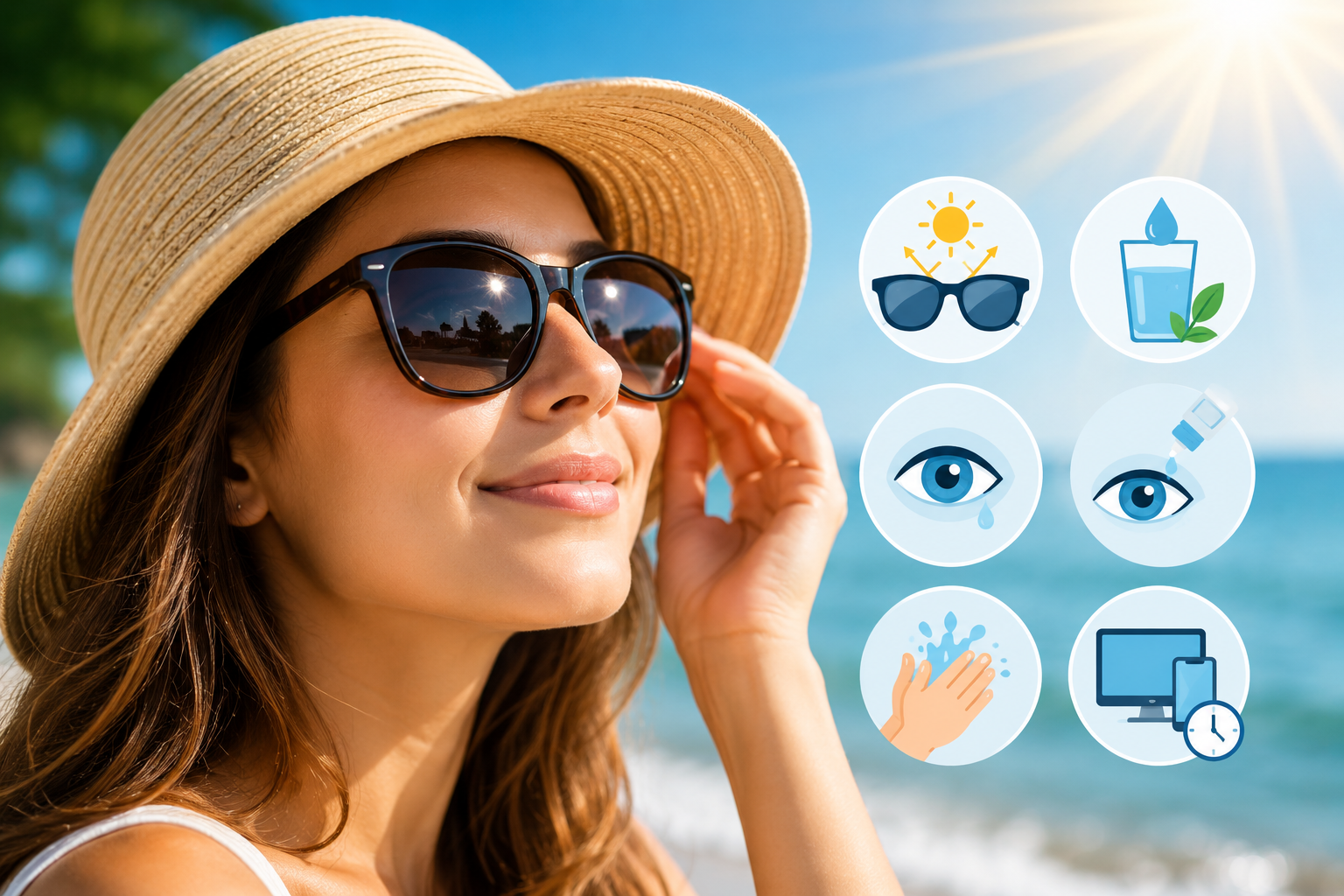
- Wear sunglasses with full UV protection outdoors
- Wash the eyes with clean water to remove dust and pollutants
- Avoid rubbing the eyes, especially with unclean hands
- Stay hydrated to support healthy tear production
- Use lubricating eye drops if recommended by your doctor
- Limit prolonged screen time to reduce eye strain
- Wear protective eyewear during outdoor sports and activities
- Use a wide-brimmed hat to reduce direct sunlight exposure
Maintaining Healthy Vision During Summer
Although summer can increase the risk of eye discomfort, simple preventive measures can help protect your vision. Wearing protective sunglasses, maintaining proper hygiene, staying hydrated, and seeking timely medical advice when symptoms occur are all important steps in preserving eye health.
Regular eye examinations are also recommended, especially for individuals who frequently experience dryness, irritation, or sensitivity to light during summer.
Conclusion
Summer activities and outdoor adventures are enjoyable, but they should not come at the cost of your eye health. Practicing good summer eye care habits can help protect your eyes from infections, dryness, and UV-related damage.
By prioritizing proper eye protection, hydration, and hygiene, you can keep your eyes comfortable and healthy throughout the season.
If you experience persistent redness, irritation, pain, or changes in vision, consult an eye specialist promptly for proper evaluation and treatment.
FAQs
Why is eye care important during summer?
Summer heat, dust, pollution, and UV rays can increase the risk of dryness, allergies, irritation, and eye infections.
How can I protect my eyes during summer?
Wear UV-protective sunglasses, stay hydrated, avoid rubbing your eyes, maintain proper hygiene, and use lubricating eye drops if advised by an eye specialist.
Can sunlight damage the eyes?
Yes. Prolonged UV exposure may increase the risk of photokeratitis, cataracts, retinal damage, and other eye conditions.
Why do eyes feel dry during summer?
High temperatures, dehydration, air conditioning, and increased screen time can cause tears to evaporate faster, leading to dryness and irritation.
Are sunglasses necessary on cloudy days?
Yes. UV rays can still penetrate through clouds, so wearing sunglasses remains important even on overcast days.
Are dark sunglasses enough for sun protection?
No, dark sunglasses are not enough for sun protection because they don’t have UV protection. The best sunglasses for summer are UV400 or 100% UVA/UVB.
Why do eyes burn in summer?
Eyes burn due to heat, dryness, UV exposure, and pollutants that irritate the eye surface and tear film.