

|
Key Takeaways:
|
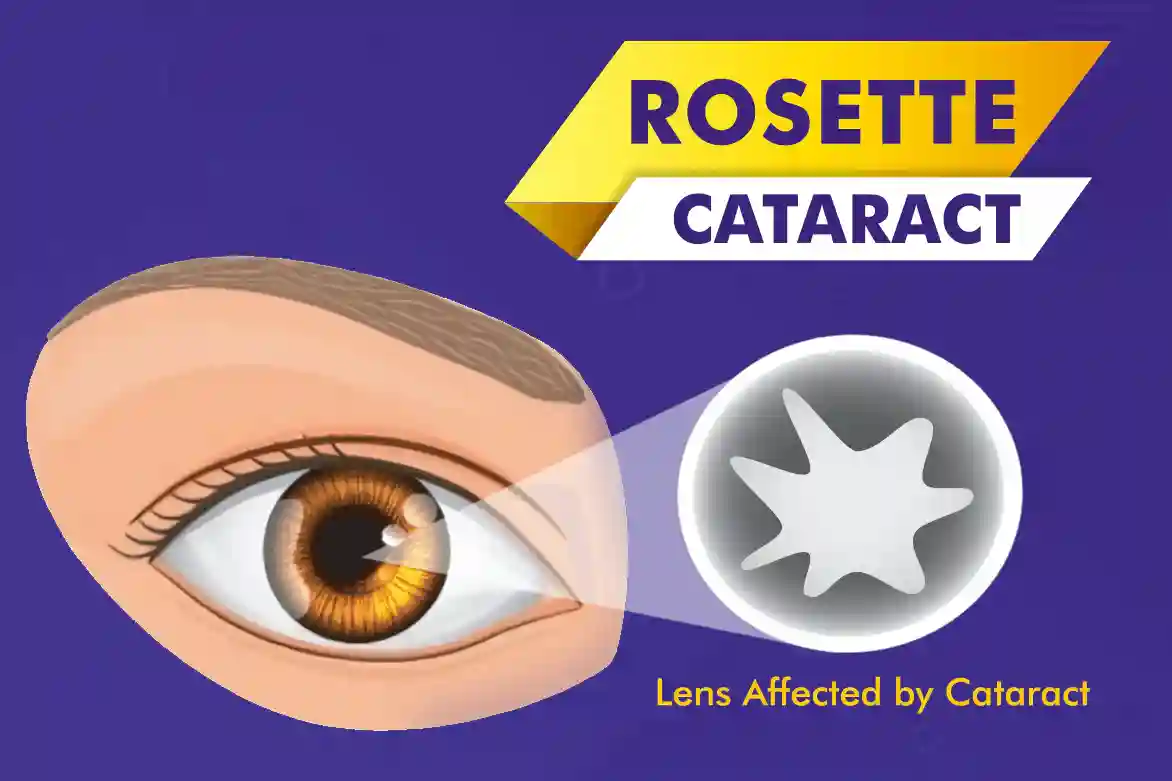
Rosette cataract is a distinct form of lens opacity characterised by a star- or petal-shaped pattern resembling a rosette flower. Unlike age-related cataracts that typically progress slowly, rosette cataracts often develop after physical injury to the eye and may appear weeks, months, or even years following the trauma.
The rosette pattern forms due to the disruption of lens fibres in a symmetrical arrangement, making it easily identifiable during a slit-lamp examination. This cataract may initially affect only part of the lens but can progress to involve the central visual axis, leading to noticeable vision impairment.
In many cases, rosette cataract is classified under traumatic cataract, as trauma remains the most common underlying cause.
How Does Rosette Cataract Develop?
The eye’s natural lens is made of organised, transparent fibres that allow light to pass clearly to the retina. When the eye experiences blunt or penetrating trauma, shockwaves travel through the eye and disrupt these fibres.
Instead of becoming uniformly cloudy, the damaged fibres opacify in a radial pattern, resulting in the characteristic rosette appearance. Importantly, this disruption may not immediately affect vision, which is why some patients remain asymptomatic in early stages.
Causes of Rosette Cataract
While trauma is the primary trigger, several factors may contribute to the development of rosette cataract:
1. Ocular Trauma
Blunt force injuries, such as sports injuries, road accidents, workplace incidents, or physical assault,s are the leading cause. Even if the outer eye appears normal, internal lens damage can occur, leading to a traumatic cataract with rosette morphology.
2. Radiation Exposure
Exposure to ionising radiation or prolonged ultraviolet radiation can damage lens proteins, increasing the risk of cataract formation, including rosette patterns in susceptible individuals.
3. Congenital or Metabolic Factors
Rarely, genetic disorders, metabolic conditions, or abnormalities in lens development can predispose individuals to early-onset rosette cataract, even without a clear trauma history.
4. Long-Term Medication Use
Certain medications, particularly corticosteroids taken over extended periods, may increase overall cataract risk, although trauma-related mechanisms remain more dominant in rosette cataract.
Symptoms of Rosette Cataract
The symptoms of rosette cataract can vary depending on the stage of development. Common symptoms include:
- Blurred or hazy vision
- Reduced contrast sensitivity
- Difficulty seeing in low-light conditions
- Increased glare or halos around lights
- Light sensitivity (photophobia)
In advanced cases, the rosette-shaped opacity may be visible during an eye examination, even if the patient is unaware of its presence.
How Is Rosette Cataract Diagnosed?
An eye specialists diagnoses rosette cataract through a comprehensive eye examination. This may include:
Slit Lamp Examination
This allows direct visualisation of the lens, revealing the classic rosette-shaped opacity.
Visual Acuity Testing
Measures the extent of vision impairment and helps guide treatment decisions.
Dilated Eye Examination
Provides a detailed view of the lens, retina, and optic nerve, ensuring no additional trauma-related damage is present.
Ocular Imaging (if required)
In trauma cases, imaging may be used to assess associated injuries to other eye structures.
Rosette Cataract Treatment Options
Treatment depends on the severity of symptoms and degree of vision impairment.
Non-Surgical Management (Early Stage)
If vision is minimally affected, conservative management may be sufficient:
- Prescription glasses or contact lenses
- Improved lighting for reading and near work
- Anti-glare lenses and lifestyle adjustments
Regular follow-ups are crucial for monitoring progress.
Surgical Treatment for Rosette Cataract
When vision deterioration interferes with daily activities, surgery becomes the most effective treatment.
Cataract Surgery for Rosette Cataract Includes:
Phacoemulsification
The cloudy lens is broken into microscopic fragments using ultrasound and gently removed.
Intraocular Lens (IOL) Implantation
A clear artificial lens replaces the natural lens, restoring visual clarity.
Cataract surgery outcomes for rosette cataract are generally excellent, provided there is no severe damage to other ocular structures from the initial trauma.
Rosette Cataract Seen In Different Age Groups
While commonly associated with younger patients due to trauma, rosette cataract can occur across age groups:
- Children and Young Adults: Often trauma-related or congenital
- Middle-Aged Adults: Occupational or accident-related injuries
- Older Adults: May coexist with age-related cataracts
Regardless of age, early evaluation is crucial for preserving long-term vision.
Early Rosette Cataract vs. Late Rosette Cataract
Early Rosette Cataract
- May not cause noticeable vision problems
- Often detected during routine eye exams
- Managed with glasses or contact lenses
Late Rosette Cataract
- Can lead to significant vision impairment
- Requires surgical intervention in most cases
- May be associated with increased intraocular pressure
Prognosis and Visual Outcomes
With timely diagnosis and appropriate management, the prognosis for rosette cataract is highly favourable. Surgical outcomes are comparable to standard cataract surgery, especially when the eye has healed well from the initial injury. Delaying treatment, however, may lead to worsening vision and increased surgical complexity, particularly in trauma-associated cases.
Conclusion
Rosette cataract is a distinctive and clinically important form of cataract most often linked to eye trauma. Though it may initially remain unnoticed, progression can significantly affect vision over time. Understanding its causes, symptoms, and treatment options empowers patients to seek timely care.
Whether managed conservatively or surgically, early detection and expert ophthalmic evaluation are key to achieving the best visual outcomes. If you have a history of eye injury or notice unexplained vision changes, prompt consultation can help protect your sight and long-term eye health.
FAQs
Can rosette cataract be inherited?
Yes, rosette cataract can be inherited. It is often caused by genetic mutations that affect the development and structure of the lens. If a family member has rosette cataract, there may be an increased risk of developing the condition.
Can rosette cataract be treated with medication?
No, rosette cataract cannot be treated with medication. The main treatment option is surgical removal of the affected lens and replacement with an artificial lens.
Is rosette cataract reversible?
Rosette cataract is typically not reversible. Once the opacities form in the lens, they cannot be removed without surgical intervention.
Can rosette cataract cause blindness?
Untreated rosette cataract can significantly impact vision and may lead to blindness if left untreated. However, with appropriate diagnosis and treatment, vision can be restored and the risk of blindness can be minimized.
Is rosette cataract common?
Rosette cataract is relatively rare compared to other types of cataract. Its prevalence may vary depending on the population studied and other factors. It is important to consult with an eye care professional for personalized information and advice regarding rosette cataract.
What is the difference between early and late rosette cataracts?
Early rosette cataracts have a star-shaped pattern, while late rosette cataracts show more complex formations.
What is rosette cataract?
Rosette cataracts are characterized by a flower-like pattern in the lens.
What causes a rosette-shaped cataract?
A rosette-shaped cataract is usually caused by blunt trauma to the eye, leading to lens fiber disruption and opacity formation in a distinct pattern.
How is rosette cataract seen in an eye examination?
Rosette cataract is seen in a slit-lamp examination, where its unique petal-like pattern can be observed in the lens.
Is rosette cataract treatment always surgical?
Not always. In mild cases, corrective lenses and lifestyle adjustments may help. However, if vision deteriorates, cataract surgery may be required.
What is the difference between early rosette cataract and late rosette cataract?
Early rosette cataract may not cause significant symptoms and can often be managed conservatively, while late-stage cataract can impair vision and necessitate surgery.
Can rosette cataract be prevented?
Protective eyewear can help reduce the risk of trauma-induced cataracts, and regular eye check-ups can aid in early detection and management.