What to Expect Before and After LASIK Eye Surgery
- By Centre For Sight
- 6 minutes
Blog Summary
- Before LASIK eye surgery: Finish all eye tests, stop contact lenses as advised, share your full medical history, arrange a ride home, and avoid eye makeup/perfume on the day.
- What happens in LASIK: Eyes are numbed, a thin flap is made, the laser reshapes the cornea, and the flap is placed back, no stitches needed; clinic time is about an hour.
- After LASIK eye surgery: Vision looks hazy, eyes feel gritty/watery, and light seems bright, this is normal in the first 24?48 hours.
- Golden rule: Do not rub your eyes. Wear the night shield for a week and sunglasses outdoors.
- Drops & hygiene: Use prescribed drops on time; keep soap/shower water out of eyes for a couple of days; skip eye makeup for about a week.
- Activity: Easy routine in 1?3 days; avoid dusty places, heavy workouts, bending/straining for a few days; no swimming/steam rooms for ~2 weeks.
- Screens & driving: Keep screens minimal on day 1; follow the 20-20-20 rule; drive only when your doctor says it's safe.
- Follow-ups: Attend the 24-hour check and all scheduled visits.
- Red flags (call your doctor): Sudden drop in vision, strong pain, increasing redness/discharge, or worsening light sensitivity.
- Good prep and careful aftercare make healing smooth; most people notice clear improvement within 1?2 days, with small ups and downs for a few weeks.
LASIK eye surgery is a rapidly increasing form of refractive surgery that remodels the cornea with a laser. The procedure corrects common vision issues such as myopia (short-sightedness), hyperopia (long-sightedness), and astigmatism. By precisely altering the shape of the cornea, the procedure causes light to focus properly on the retina, giving you sharper, clearer vision ? often without eyeglasses or contact lenses.
This guide explains what to expect before and after LASIK eye surgery, the key steps on surgery day, and precautions after LASIK eye surgery, so you feel ready.
Before and After LASIK Eye Surgery: What You Need to Know
Both the steps before surgery and the care after it decide how well you see in the end.?The guide below takes you through the plan, from the first checks to smooth healing, so you know exactly what to expect.
Things to Do Before LASIK Eye Surgery
In the weeks leading up to LASIK, your eye doctor will run a full set of tests to confirm you're a good candidate.?
These include checking your glasses number, mapping the cornea (topography), measuring corneal thickness, pupil size in dim light, and a dry-eye assessment.?If any dryness is found, you get drops or a short treatment plan first so your measurements are accurate.
Because contact lenses can change the natural shape of the cornea, you'll need a lens ?wash-out? period before measurements:
- Soft lenses: stop at least 1 week before your pre-op tests.
- Rigid gas-permeable (RGP/hard) lenses: stop 3?4 weeks before.
A few practical tips make surgery day easy:
- Share your full medical history and medicines, including allergies and any previous eye procedures.
- Arrange a ride home; you shouldn't drive right after surgery.
- Avoid eye makeup for 24?48 hours before surgery; clean your eyelids the night before.
- Skip lotions, perfumes, or aftershaves on the day, as they can affect the laser room airflow.
- Wear comfy, lint-free clothes, eat a light meal, and avoid alcohol the night before and on the day.
- Plan light duties for the first 24?48 hours after surgery.
What Happens During LASIK Surgery
Surgery day is calm and quick.?You'll arrive, sign consent, and get numbing eye drops; this keeps you comfortable.?A small device gently holds your eyelids open, and you'll be asked to look at a blinking target light.
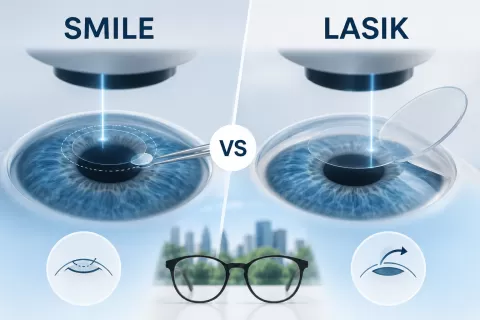
First, a very thin flap is created on the surface of the cornea. The flap is lifted, and the laser reshapes the cornea based on your custom measurements.?You might feel light pressure for a few seconds and hear soft clicks from the laser; some people notice a mild smell, that is normal.?
Vision can go dim or blurry for a moment and then return. The laser time is only a few minutes per eye; total clinic time is about an hour.?When the reshaping is done, the flap is placed back to heal on its own, no stitches needed.?Your team will check your eyes, give you protective shields and drops, and guide you on resting for the rest of the day.
Understanding What Happens After LASIK
Right after surgery, vision looks foggy or soft, and the eyes can feel gritty or watery.?
Light seems bright, and you might notice glare or halos at night. This is normal in the first days after LASIK eye surgery and eases as the surface heals.
Below are the simple precautions after LASIK eye surgery:
- The golden rule is simple: don't rub your eyes. Rubbing can disturb the healing flap.?
- Instead, rest with your eyes closed for a few hours, wear the protective shield when you nap and at night for the first week, and put on sunglasses outdoors.
- Follow your drop schedule exactly (antibiotic/anti-inflammatory as prescribed) and use lubricating tears to ease dryness.?
- Keep your screen time low on day one, then gradually return to it using the 20-20-20 rule.
- Plan easy days at first. Avoid dusty places, heavy workouts, and bending/straining in the first few days.?
- Skip eye makeup for about a week. Keep shower water and soap out of your eyes for a couple of days, and delay swimming or hot tubs for at least two weeks.?
- Drive only after your doctor says it's safe.
- You'll have a check-up within 24 hours and more visits after that, don't miss them.?
- Call your doctor right away if you have strong pain, sudden vision drop, increasing redness, or discharge.?
Most people notice clear improvement within 24?48 hours, but small ups and downs are common for a few weeks.?
With these precautions after LASIK, healing is smooth and vision keeps sharpening over the next weeks.
Conclusion
A little planning before surgery and steady care after it make the biggest difference to your results.?With the right steps, most people see clearly and heal smoothly.?
Use your drops, protect your eyes, and keep your follow-ups.?If anything feels off, call your doctor. Your comfort and vision come first with before and after LASIK eye surgery.
Frequently Asked Questions
What are some important precautions before and after LASIK eye surgery?
What can I anticipate after LASIK eye surgery?
What are the key things to do before LASIK eye surgery?
Can you describe what is done during LASIK surgery in short?
Why is pre-and post-LASIK eye surgery care so important?
How long will my vision be blurry after LASIK surgery?
What are the LASIK eye surgery side effects?



Could not find what you are looking for?


