Eye Floaters: Causes, Treatment, and When to See a Doctor
- By Centre For Sight
- 7 minutes
Blog Summary
- Floaters are tiny specks/threads that drift across your view, seen best on bright backgrounds.
- Common causes: Natural aging (PVD), eye inflammation (uveitis/infection), bleeding in the eye, retinal tears/detachment, and changes after cataract or YAG laser procedures.
- Usually harmless, but watch for red flags: A sudden burst of new floaters (especially in one eye), flashes of light, or a dark curtain/veil in vision needs same-day care.
- Comfort tips: Use steady, soft lighting, take screen breaks (20-20-20 rule), wear sunglasses outdoors, stay hydrated, sleep well, and avoid heavy caffeine and eye rubbing.
- Treatment options (for persistent floaters):
~ Laser vitreolysis can break a large, stable floater into smaller, less noticeable bits (best for certain types like a Weiss ring).
~ Vitrectomy removes the vitreous gel and floaters; most effective but reserved for severe cases due to surgical risks. - When to see a doctor urgently: Sudden increase in floaters, flashes, a shadow/curtain, or new floaters after injury or eye surgery.
Eye floaters are tiny specks or strands that drift across your vision, most visible against bright backgrounds. They can be harmless, but new floaters, flashes, or a sudden shower can signal a retinal tear and need quick care. In this guide, you'll learn common causes and types, clear red flags, eye floaters treatment options, and exactly when to see a doctor.
What Are Eye Floaters?
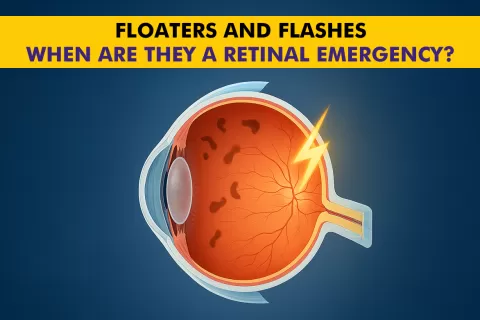
Eye floaters are tiny specks, threads, or cobweb-like shapes that drift across your view, especially against bright walls or the sky. They move when your eyes move and seem to dart away when you try to look at them directly. Most are harmless, but a sudden burst of new floaters, especially in one eye, can signal a problem that needs quick care.
What Causes Eye Floaters?
Floaters appear when small clumps form in the vitreous, the clear gel that fills the back of the eye. These clumps cast shadows on the retina, so you see them as moving spots or strands. Below are the common reasons for eye floaters: the natural aging process, inflammation, bleeding, tears in the retina, and changes after eye surgery or laser procedures:
- Age-Related Changes
As we age, the vitreous becomes more watery and pulls slightly away from the retina. This normal change, called posterior vitreous detachment (PVD), is the most common cause of floaters after about age 50. Many people notice a few new floaters over days to weeks as PVD settles.
- Eye Injuries and Inflammation:
Injury, infection, or uveitis (inflammation inside the eye) can release tiny cells and debris into the vitreous, creating floaters. These floaters may come with light sensitivity, redness, or an ache; your doctor will treat the underlying cause to calm the floaters.
- Retinal Detachment or Tears
A sudden shower of floaters, with flashes of light or a curtain/veil coming across your vision, can mean a retinal tear or detachment. This is urgent; same-day treatment can protect sight.
- Bleeding in the Eye
Conditions such as diabetic retinopathy, high blood pressure, or a fresh retinal tear can cause bleeding into the vitreous (vitreous hemorrhage). Blood cells appear as dark spots or cobwebs and can temporarily blur vision until the blood clears and the underlying cause is treated.
- Post-Surgical or Post-Laser Effects
After cataract surgery or a YAG laser capsulotomy, some people notice new floaters as the eye settles. These fade with time, but any sudden increase, flashes, or shadow in the vision should be checked promptly.
Are Eye Floaters Normal?
Yes, an occasional floater is common and usually not a worry. See a doctor promptly if you notice any of the following:
- A sudden increase in the number or size of floaters
- Flashes of light at the edge of vision
- A dark curtain or shadow blocking part of your sight
Persistent floaters that interfere with daily activities
| Important: These signs can point to a retinal tear, detachment, or bleeding, and quick treatment helps protect vision. |
How to Get Rid of Eye Floaters?
Most eye floaters fade into the background as your brain adapts, and many people don't need treatment. The aim is to rule out danger (retinal tear/bleed), then manage how much floaters bother day-to-day vision.
If symptoms are new, sudden, or worsening, get checked first; after that, comfort steps or targeted treatments can help. Below are the different natural and lifestyle ways you can get rid of eye floaters:
Natural Adaptation
Your brain learns to tune out stable floaters over weeks to months, so they feel less obvious in daily life.
Lifestyle Adjustments
Simple habits can make floaters less noticeable and ease eye strain.
- Use steady, soft lighting and avoid staring at bright, blank backgrounds for long stretches.
- Blink and take breaks (20-20-20: every 20 minutes, look 20 feet away for 20 seconds).
- Wear sunglasses outdoors to reduce glare and contrast with floaters.
- Stay hydrated and sleep well; general eye comfort improves with good routines.
- Eat a balanced diet (leafy greens, colourful vegetables, omega-3 sources). These support overall eye health, though they don't dissolve floaters.
- Limit heavy caffeine and eye rubbing; both can increase awareness of floaters.
Eye Floaters Medical Treatment
If floaters remain persistent and intrusive after a proper examination, two procedures may be discussed. These are not routine and are reserved for carefully selected cases. Below are the eye floaters medical treatment:
Laser Vitreolysis
A focused laser breaks a large floater into smaller, less noticeable bits, most helpful for a distinct Weiss ring after a settled PVD. Best results occur when the floater sits well away from the lens and retina and has been stable for months. It may reduce but not erase symptoms, and not everyone is a candidate.
Possible downsides include temporary inflammation, increased floaters, or, rarely, pressure spikes. Your doctor will review the risks and benefits for your eye.
Vitrectomy
Vitrectomy removes the vitreous gel (with the floaters) and replaces it with a clear solution, which can give the most predictable relief in severe, life-limiting cases. Modern small-gauge surgery has improved recovery, but there are real risks: retinal tear/detachment, infection, and, in people who haven't undergone cataract surgery, faster cataract development. Because of these risks, vitrectomy is usually a last-line option after careful discussion or a second opinion.
When to Seek Treatment for Eye Floaters?
See an eye doctor immediately for eye floaters if you notice:
- A sudden increase in floaters (especially in one eye)
- Flashes of light at the edge of vision
- A dark curtain/veil or patch of missing vision
- New floaters after an eye injury or eye surgery
Conclusion
Most eye floaters are harmless and fade into the background as your brain adapts. The key is to rule out emergencies first, especially if floaters arrive suddenly with flashes or a shadow in your vision. If floaters remain intrusive, options such as laser vitreolysis or vitrectomy may be considered in selected cases after an eye specialist examination. With timely checks and steady habits, most people do well without long-term problems.
Frequently Asked Questions
What are eye floaters made of?
Can eye floaters go away on their own?
What causes sudden floaters in one eye?
How to get rid of eye floaters without surgery?
Is there a permanent treatment for eye floaters?
How to reduce floaters in the eyes naturally?
What causes eye floaters?
How to treat eye floaters?
Are floaters in the eye dangerous?

Could not find what you are looking for?


