

- Fuchs’ Dystrophy Affects the Inner Layers of the Cornea: Fuchs’ dystrophy is a condition that affects the endothelial cells of the cornea. These cells are responsible for maintaining the cornea’s clarity. As the cells degenerate, the cornea becomes cloudy, leading to vision problems.
- Corneal Diseases Are Often Asymptomatic in the Early Stages: Many corneal conditions, such as early keratoconus, may not show any obvious symptoms until they have progressed. Regular eye exams are essential for early detection and management of corneal diseases.
- Corneal Infections Can Be Caused by Contact Lenses: Improper hygiene or extended use of contact lenses can lead to corneal infections. Bacterial or fungal keratitis, if not treated promptly, can lead to permanent corneal damage.
FAQs
What Happens If Cornea Is Damaged?
Preventing corneal diseases involves regular eye checkups, wearing protective eyewear, maintaining eye hygiene, and ensuring a nutrient-rich diet that supports eye health.
Can cornea damage cause blindness?
Yes, severe corneal damage can lead to partial or complete blindness.
What is the most common cause of corneal disease?
Infections and injuries are the most common causes of corneal disease.
Can eye drops treat corneal disease?
Yes, mild corneal diseases can often be managed with prescribed eye drops.
Why is early action important for corneal disease?
Early diagnosis and treatment can prevent vision loss and improve recovery. Consulting a cornea specialist when symptoms appear helps protect eye health.
- Keratoconus is a Leading Cause of Corneal Transplants: Keratoconus, a condition in which the cornea becomes thin and irregularly shaped, is one of the most common reasons for corneal transplantation. It often begins during adolescence and gradually worsens over time.
- Fuchs’ Dystrophy Affects the Inner Layers of the Cornea: Fuchs’ dystrophy is a condition that affects the endothelial cells of the cornea. These cells are responsible for maintaining the cornea’s clarity. As the cells degenerate, the cornea becomes cloudy, leading to vision problems.
- Corneal Diseases Are Often Asymptomatic in the Early Stages: Many corneal conditions, such as early keratoconus, may not show any obvious symptoms until they have progressed. Regular eye exams are essential for early detection and management of corneal diseases.
- Corneal Infections Can Be Caused by Contact Lenses: Improper hygiene or extended use of contact lenses can lead to corneal infections. Bacterial or fungal keratitis, if not treated promptly, can lead to permanent corneal damage.
FAQs
What Happens If Cornea Is Damaged?
Preventing corneal diseases involves regular eye checkups, wearing protective eyewear, maintaining eye hygiene, and ensuring a nutrient-rich diet that supports eye health.
Can cornea damage cause blindness?
Yes, severe corneal damage can lead to partial or complete blindness.
What is the most common cause of corneal disease?
Infections and injuries are the most common causes of corneal disease.
Can eye drops treat corneal disease?
Yes, mild corneal diseases can often be managed with prescribed eye drops.
Why is early action important for corneal disease?
Early diagnosis and treatment can prevent vision loss and improve recovery. Consulting a cornea specialist when symptoms appear helps protect eye health.
- The Cornea is Nourished by Tears: Unlike most tissues in the body, the cornea does not have blood vessels. Instead, it is nourished by the aqueous humor (the fluid inside the eye) and the tears produced by the lacrimal glands. Any disruption in the tear film or fluid balance can lead to corneal problems.
- Keratoconus is a Leading Cause of Corneal Transplants: Keratoconus, a condition in which the cornea becomes thin and irregularly shaped, is one of the most common reasons for corneal transplantation. It often begins during adolescence and gradually worsens over time.
- Fuchs’ Dystrophy Affects the Inner Layers of the Cornea: Fuchs’ dystrophy is a condition that affects the endothelial cells of the cornea. These cells are responsible for maintaining the cornea’s clarity. As the cells degenerate, the cornea becomes cloudy, leading to vision problems.
- Corneal Diseases Are Often Asymptomatic in the Early Stages: Many corneal conditions, such as early keratoconus, may not show any obvious symptoms until they have progressed. Regular eye exams are essential for early detection and management of corneal diseases.
- Corneal Infections Can Be Caused by Contact Lenses: Improper hygiene or extended use of contact lenses can lead to corneal infections. Bacterial or fungal keratitis, if not treated promptly, can lead to permanent corneal damage.
FAQs
What Happens If Cornea Is Damaged?
Preventing corneal diseases involves regular eye checkups, wearing protective eyewear, maintaining eye hygiene, and ensuring a nutrient-rich diet that supports eye health.
Can cornea damage cause blindness?
Yes, severe corneal damage can lead to partial or complete blindness.
What is the most common cause of corneal disease?
Infections and injuries are the most common causes of corneal disease.
Can eye drops treat corneal disease?
Yes, mild corneal diseases can often be managed with prescribed eye drops.
Why is early action important for corneal disease?
Early diagnosis and treatment can prevent vision loss and improve recovery. Consulting a cornea specialist when symptoms appear helps protect eye health.
- Corneal Diseases Can Be Genetic: Conditions like Fuchs’ dystrophy and keratoconus often run in families. These inherited disorders can lead to gradual degeneration of the cornea, sometimes without any obvious symptoms in the early stages.
- The Cornea is Nourished by Tears: Unlike most tissues in the body, the cornea does not have blood vessels. Instead, it is nourished by the aqueous humor (the fluid inside the eye) and the tears produced by the lacrimal glands. Any disruption in the tear film or fluid balance can lead to corneal problems.
- Keratoconus is a Leading Cause of Corneal Transplants: Keratoconus, a condition in which the cornea becomes thin and irregularly shaped, is one of the most common reasons for corneal transplantation. It often begins during adolescence and gradually worsens over time.
- Fuchs’ Dystrophy Affects the Inner Layers of the Cornea: Fuchs’ dystrophy is a condition that affects the endothelial cells of the cornea. These cells are responsible for maintaining the cornea’s clarity. As the cells degenerate, the cornea becomes cloudy, leading to vision problems.
- Corneal Diseases Are Often Asymptomatic in the Early Stages: Many corneal conditions, such as early keratoconus, may not show any obvious symptoms until they have progressed. Regular eye exams are essential for early detection and management of corneal diseases.
- Corneal Infections Can Be Caused by Contact Lenses: Improper hygiene or extended use of contact lenses can lead to corneal infections. Bacterial or fungal keratitis, if not treated promptly, can lead to permanent corneal damage.
FAQs
What Happens If Cornea Is Damaged?
Preventing corneal diseases involves regular eye checkups, wearing protective eyewear, maintaining eye hygiene, and ensuring a nutrient-rich diet that supports eye health.
Can cornea damage cause blindness?
Yes, severe corneal damage can lead to partial or complete blindness.
What is the most common cause of corneal disease?
Infections and injuries are the most common causes of corneal disease.
Can eye drops treat corneal disease?
Yes, mild corneal diseases can often be managed with prescribed eye drops.
Why is early action important for corneal disease?
Early diagnosis and treatment can prevent vision loss and improve recovery. Consulting a cornea specialist when symptoms appear helps protect eye health.
- Cornea Has the Ability to Heal Itself: In cases of minor injury, such as a superficial scratch, the cornea has the ability to heal on its own. However, deeper injuries or infections can interfere with this healing process, requiring medical intervention.
- Corneal Diseases Can Be Genetic: Conditions like Fuchs’ dystrophy and keratoconus often run in families. These inherited disorders can lead to gradual degeneration of the cornea, sometimes without any obvious symptoms in the early stages.
- The Cornea is Nourished by Tears: Unlike most tissues in the body, the cornea does not have blood vessels. Instead, it is nourished by the aqueous humor (the fluid inside the eye) and the tears produced by the lacrimal glands. Any disruption in the tear film or fluid balance can lead to corneal problems.
- Keratoconus is a Leading Cause of Corneal Transplants: Keratoconus, a condition in which the cornea becomes thin and irregularly shaped, is one of the most common reasons for corneal transplantation. It often begins during adolescence and gradually worsens over time.
- Fuchs’ Dystrophy Affects the Inner Layers of the Cornea: Fuchs’ dystrophy is a condition that affects the endothelial cells of the cornea. These cells are responsible for maintaining the cornea’s clarity. As the cells degenerate, the cornea becomes cloudy, leading to vision problems.
- Corneal Diseases Are Often Asymptomatic in the Early Stages: Many corneal conditions, such as early keratoconus, may not show any obvious symptoms until they have progressed. Regular eye exams are essential for early detection and management of corneal diseases.
- Corneal Infections Can Be Caused by Contact Lenses: Improper hygiene or extended use of contact lenses can lead to corneal infections. Bacterial or fungal keratitis, if not treated promptly, can lead to permanent corneal damage.
FAQs
What Happens If Cornea Is Damaged?
Preventing corneal diseases involves regular eye checkups, wearing protective eyewear, maintaining eye hygiene, and ensuring a nutrient-rich diet that supports eye health.
Can cornea damage cause blindness?
Yes, severe corneal damage can lead to partial or complete blindness.
What is the most common cause of corneal disease?
Infections and injuries are the most common causes of corneal disease.
Can eye drops treat corneal disease?
Yes, mild corneal diseases can often be managed with prescribed eye drops.
Why is early action important for corneal disease?
Early diagnosis and treatment can prevent vision loss and improve recovery. Consulting a cornea specialist when symptoms appear helps protect eye health.
- Corneal Transplantation is Common: Corneal transplantation is one of the most successful and frequently performed transplant surgeries worldwide. It is a viable option for those suffering from severe corneal disease, offering the potential for restored vision.
- Cornea Has the Ability to Heal Itself: In cases of minor injury, such as a superficial scratch, the cornea has the ability to heal on its own. However, deeper injuries or infections can interfere with this healing process, requiring medical intervention.
- Corneal Diseases Can Be Genetic: Conditions like Fuchs’ dystrophy and keratoconus often run in families. These inherited disorders can lead to gradual degeneration of the cornea, sometimes without any obvious symptoms in the early stages.
- The Cornea is Nourished by Tears: Unlike most tissues in the body, the cornea does not have blood vessels. Instead, it is nourished by the aqueous humor (the fluid inside the eye) and the tears produced by the lacrimal glands. Any disruption in the tear film or fluid balance can lead to corneal problems.
- Keratoconus is a Leading Cause of Corneal Transplants: Keratoconus, a condition in which the cornea becomes thin and irregularly shaped, is one of the most common reasons for corneal transplantation. It often begins during adolescence and gradually worsens over time.
- Fuchs’ Dystrophy Affects the Inner Layers of the Cornea: Fuchs’ dystrophy is a condition that affects the endothelial cells of the cornea. These cells are responsible for maintaining the cornea’s clarity. As the cells degenerate, the cornea becomes cloudy, leading to vision problems.
- Corneal Diseases Are Often Asymptomatic in the Early Stages: Many corneal conditions, such as early keratoconus, may not show any obvious symptoms until they have progressed. Regular eye exams are essential for early detection and management of corneal diseases.
- Corneal Infections Can Be Caused by Contact Lenses: Improper hygiene or extended use of contact lenses can lead to corneal infections. Bacterial or fungal keratitis, if not treated promptly, can lead to permanent corneal damage.
FAQs
What Happens If Cornea Is Damaged?
Preventing corneal diseases involves regular eye checkups, wearing protective eyewear, maintaining eye hygiene, and ensuring a nutrient-rich diet that supports eye health.
Can cornea damage cause blindness?
Yes, severe corneal damage can lead to partial or complete blindness.
What is the most common cause of corneal disease?
Infections and injuries are the most common causes of corneal disease.
Can eye drops treat corneal disease?
Yes, mild corneal diseases can often be managed with prescribed eye drops.
Why is early action important for corneal disease?
Early diagnosis and treatment can prevent vision loss and improve recovery. Consulting a cornea specialist when symptoms appear helps protect eye health.
- Corneal Diseases Can Lead to Blindness: If untreated, conditions like keratoconus, Fuchs’ dystrophy, and corneal scarring can lead to severe vision loss. The cornea’s role in focusing light means that any impairment can affect the entire visual process.
- Corneal Transplantation is Common: Corneal transplantation is one of the most successful and frequently performed transplant surgeries worldwide. It is a viable option for those suffering from severe corneal disease, offering the potential for restored vision.
- Cornea Has the Ability to Heal Itself: In cases of minor injury, such as a superficial scratch, the cornea has the ability to heal on its own. However, deeper injuries or infections can interfere with this healing process, requiring medical intervention.
- Corneal Diseases Can Be Genetic: Conditions like Fuchs’ dystrophy and keratoconus often run in families. These inherited disorders can lead to gradual degeneration of the cornea, sometimes without any obvious symptoms in the early stages.
- The Cornea is Nourished by Tears: Unlike most tissues in the body, the cornea does not have blood vessels. Instead, it is nourished by the aqueous humor (the fluid inside the eye) and the tears produced by the lacrimal glands. Any disruption in the tear film or fluid balance can lead to corneal problems.
- Keratoconus is a Leading Cause of Corneal Transplants: Keratoconus, a condition in which the cornea becomes thin and irregularly shaped, is one of the most common reasons for corneal transplantation. It often begins during adolescence and gradually worsens over time.
- Fuchs’ Dystrophy Affects the Inner Layers of the Cornea: Fuchs’ dystrophy is a condition that affects the endothelial cells of the cornea. These cells are responsible for maintaining the cornea’s clarity. As the cells degenerate, the cornea becomes cloudy, leading to vision problems.
- Corneal Diseases Are Often Asymptomatic in the Early Stages: Many corneal conditions, such as early keratoconus, may not show any obvious symptoms until they have progressed. Regular eye exams are essential for early detection and management of corneal diseases.
- Corneal Infections Can Be Caused by Contact Lenses: Improper hygiene or extended use of contact lenses can lead to corneal infections. Bacterial or fungal keratitis, if not treated promptly, can lead to permanent corneal damage.
FAQs
What Happens If Cornea Is Damaged?
Preventing corneal diseases involves regular eye checkups, wearing protective eyewear, maintaining eye hygiene, and ensuring a nutrient-rich diet that supports eye health.
Can cornea damage cause blindness?
Yes, severe corneal damage can lead to partial or complete blindness.
What is the most common cause of corneal disease?
Infections and injuries are the most common causes of corneal disease.
Can eye drops treat corneal disease?
Yes, mild corneal diseases can often be managed with prescribed eye drops.
Why is early action important for corneal disease?
Early diagnosis and treatment can prevent vision loss and improve recovery. Consulting a cornea specialist when symptoms appear helps protect eye health.
- The Cornea is the Most Sensitive Part of the Eye: The cornea is equipped with numerous nerve endings, making it incredibly sensitive. This sensitivity helps protect the eye from foreign objects, but it also means that corneal diseases often cause significant pain or discomfort.
- Corneal Diseases Can Lead to Blindness: If untreated, conditions like keratoconus, Fuchs’ dystrophy, and corneal scarring can lead to severe vision loss. The cornea’s role in focusing light means that any impairment can affect the entire visual process.
- Corneal Transplantation is Common: Corneal transplantation is one of the most successful and frequently performed transplant surgeries worldwide. It is a viable option for those suffering from severe corneal disease, offering the potential for restored vision.
- Cornea Has the Ability to Heal Itself: In cases of minor injury, such as a superficial scratch, the cornea has the ability to heal on its own. However, deeper injuries or infections can interfere with this healing process, requiring medical intervention.
- Corneal Diseases Can Be Genetic: Conditions like Fuchs’ dystrophy and keratoconus often run in families. These inherited disorders can lead to gradual degeneration of the cornea, sometimes without any obvious symptoms in the early stages.
- The Cornea is Nourished by Tears: Unlike most tissues in the body, the cornea does not have blood vessels. Instead, it is nourished by the aqueous humor (the fluid inside the eye) and the tears produced by the lacrimal glands. Any disruption in the tear film or fluid balance can lead to corneal problems.
- Keratoconus is a Leading Cause of Corneal Transplants: Keratoconus, a condition in which the cornea becomes thin and irregularly shaped, is one of the most common reasons for corneal transplantation. It often begins during adolescence and gradually worsens over time.
- Fuchs’ Dystrophy Affects the Inner Layers of the Cornea: Fuchs’ dystrophy is a condition that affects the endothelial cells of the cornea. These cells are responsible for maintaining the cornea’s clarity. As the cells degenerate, the cornea becomes cloudy, leading to vision problems.
- Corneal Diseases Are Often Asymptomatic in the Early Stages: Many corneal conditions, such as early keratoconus, may not show any obvious symptoms until they have progressed. Regular eye exams are essential for early detection and management of corneal diseases.
- Corneal Infections Can Be Caused by Contact Lenses: Improper hygiene or extended use of contact lenses can lead to corneal infections. Bacterial or fungal keratitis, if not treated promptly, can lead to permanent corneal damage.
FAQs
What Happens If Cornea Is Damaged?
Preventing corneal diseases involves regular eye checkups, wearing protective eyewear, maintaining eye hygiene, and ensuring a nutrient-rich diet that supports eye health.
Can cornea damage cause blindness?
Yes, severe corneal damage can lead to partial or complete blindness.
What is the most common cause of corneal disease?
Infections and injuries are the most common causes of corneal disease.
Can eye drops treat corneal disease?
Yes, mild corneal diseases can often be managed with prescribed eye drops.
Why is early action important for corneal disease?
Early diagnosis and treatment can prevent vision loss and improve recovery. Consulting a cornea specialist when symptoms appear helps protect eye health.
|
Key Takeaways:
|
The cornea is an essential part of the eye, playing a crucial role in vision and eye health. Corneal disease can affect individuals in various ways, ranging from mild discomfort to severe vision impairment. In this article, we will explore what corneal disease is, its causes, symptoms, and treatments, to provide a comprehensive understanding of what is cornea and how it impacts vision.
What is Cornea?
The cornea is the transparent, dome-shaped surface at the front of the eye. It serves as the eye’s primary lens, responsible for refracting light to help focus images onto the retina. The cornea meaning refers to its role in vision and how it contributes to the overall function of the eye.
The cornea is made up of five layers, each playing a specific part in maintaining eye health and vision clarity. Without a healthy cornea, proper vision can be impaired.
What is the Function of Cornea?
The primary function of the cornea is to focus light as it enters the eye. Light passes through the cornea before reaching the lens, which then further focuses the light onto the retina. The cornea also acts as a protective barrier, shielding the inner parts of the eye from foreign particles, germs, and potential injury.
An important aspect of the cornea is its ability to maintain transparency. The disease of cornea can result in the loss of this transparency, leading to blurred vision or complete vision loss if left untreated.
Understanding Corneal Disease and Its Importance
A healthy cornea is vital for clear vision, as it refracts light and protects the inner eye structures. Corneal disease refers to any condition affecting the cornea’s transparency, shape, or integrity, leading to vision impairment. Serving as the eye’s front window, the cornea focuses light onto the retina, and when diseased, this balance is disrupted, reducing clarity and eye health.
What are the Causes of Corneal Disease?
Several factors can contribute to the onset of corneal disease:
- Infections – bacterial, viral, fungal keratitis can damage the cornea.
- Injuries & trauma – scratches, abrasions, or chemical exposure damage the surface.
- Genetic disorders & degenerative conditions – for example, degenerative corneal disease such as dystrophies (which are inherited).
- Age-related changes and systemic disease – poorer repair, thinning, or other eye surgeries may predispose.
- Risk behaviour – e.g., improper contact lens use, low hygiene, poor environment.
Types of Corneal Diseases
Here is a snapshot of what types of conditions fall under corneal diseases:
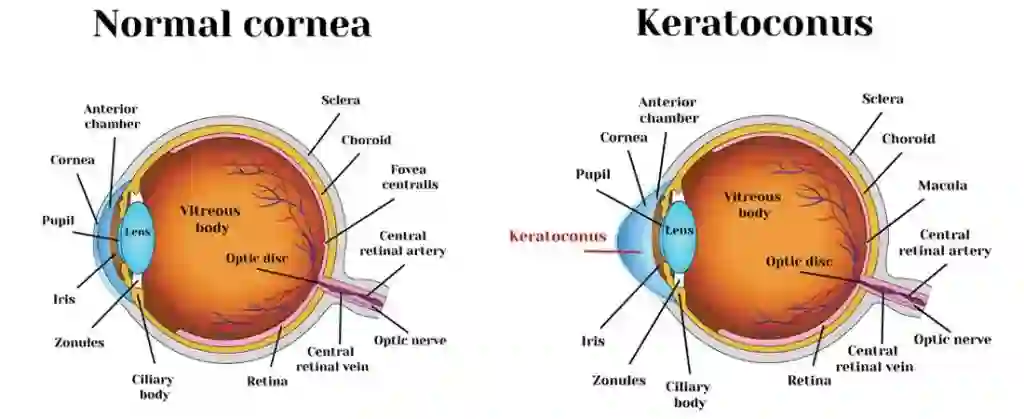
- Ectatic disorders (e.g., Keratoconus) – the cornea thins and bulges outward.
- Dystrophies – inherited degenerative corneal disease affecting clarity or shape.
- Infections & ulcers – open sores (ulcers) on the cornea caused by infection or injury.
- Band keratopathy – deposition of calcium in the cornea.
- Congenital corneal disease – present from birth based on genetic or developmental causes. (For example, some dystrophies)
- Traumatic/abrasive injury and scarring.
Recognising Corneal Disease Symptoms
Early detection matters. Typical corneal disease symptoms include:
- Pain or discomfort in the eye.
- Redness, tearing or excess watering.
- Blurred or distorted vision, clouding of the cornea.
- Light sensitivity (photophobia).
- Foreign-body sensation, or in severe cases, scarring or permanent vision impairment.
What Happens If Cornea is Damaged?
If the cornea is damaged, its ability to refract light properly is compromised, leading to a significant decrease in vision. The severity of the impact depends on the extent of the damage. Minor scratches or abrasions may heal with proper care, while more severe damage could require surgical intervention, such as corneal transplant surgery.
If left untreated, corneal damage can result in permanent vision impairment. This highlights the importance of seeking medical advice as soon as symptoms appear.
Approaches to Corneal Disease Treatment
The care for corneal disease treatment is personalised, ranging from medication to advanced surgery.
- Medication & conservative management: anti-infectives, lubricants, anti-inflammatories for early/mild cases.
- Laser or refractive treatments: for early correction of shape or surface irregularities.
- Surgical intervention: in severe or degenerative cases (e.g., degenerative corneal disease or when there is a risk of vision loss) – procedures like corneal transplants (keratoplasty) may be recommended.
Facts About Corneal Diseases
Understanding facts about Cornea Diseases can provide valuable insights into how these conditions affect the eye. Here are some key facts:
- The Cornea is the Most Sensitive Part of the Eye: The cornea is equipped with numerous nerve endings, making it incredibly sensitive. This sensitivity helps protect the eye from foreign objects, but it also means that corneal diseases often cause significant pain or discomfort.
- Corneal Diseases Can Lead to Blindness: If untreated, conditions like keratoconus, Fuchs’ dystrophy, and corneal scarring can lead to severe vision loss. The cornea’s role in focusing light means that any impairment can affect the entire visual process.
- Corneal Transplantation is Common: Corneal transplantation is one of the most successful and frequently performed transplant surgeries worldwide. It is a viable option for those suffering from severe corneal disease, offering the potential for restored vision.
- Cornea Has the Ability to Heal Itself: In cases of minor injury, such as a superficial scratch, the cornea has the ability to heal on its own. However, deeper injuries or infections can interfere with this healing process, requiring medical intervention.
- Corneal Diseases Can Be Genetic: Conditions like Fuchs’ dystrophy and keratoconus often run in families. These inherited disorders can lead to gradual degeneration of the cornea, sometimes without any obvious symptoms in the early stages.
- The Cornea is Nourished by Tears: Unlike most tissues in the body, the cornea does not have blood vessels. Instead, it is nourished by the aqueous humor (the fluid inside the eye) and the tears produced by the lacrimal glands. Any disruption in the tear film or fluid balance can lead to corneal problems.
- Keratoconus is a Leading Cause of Corneal Transplants: Keratoconus, a condition in which the cornea becomes thin and irregularly shaped, is one of the most common reasons for corneal transplantation. It often begins during adolescence and gradually worsens over time.
- Fuchs’ Dystrophy Affects the Inner Layers of the Cornea: Fuchs’ dystrophy is a condition that affects the endothelial cells of the cornea. These cells are responsible for maintaining the cornea’s clarity. As the cells degenerate, the cornea becomes cloudy, leading to vision problems.
- Corneal Diseases Are Often Asymptomatic in the Early Stages: Many corneal conditions, such as early keratoconus, may not show any obvious symptoms until they have progressed. Regular eye exams are essential for early detection and management of corneal diseases.
- Corneal Infections Can Be Caused by Contact Lenses: Improper hygiene or extended use of contact lenses can lead to corneal infections. Bacterial or fungal keratitis, if not treated promptly, can lead to permanent corneal damage.
FAQs
What Happens If Cornea Is Damaged?
Preventing corneal diseases involves regular eye checkups, wearing protective eyewear, maintaining eye hygiene, and ensuring a nutrient-rich diet that supports eye health.
Can cornea damage cause blindness?
Yes, severe corneal damage can lead to partial or complete blindness.
What is the most common cause of corneal disease?
Infections and injuries are the most common causes of corneal disease.
Can eye drops treat corneal disease?
Yes, mild corneal diseases can often be managed with prescribed eye drops.
Why is early action important for corneal disease?
Early diagnosis and treatment can prevent vision loss and improve recovery. Consulting a cornea specialist when symptoms appear helps protect eye health.