Paediatric Ophthalmology: What does it mean?
- By Centre For Sight
- 5 minutes
Blog Summary
Early paediatric eye care protects lifelong vision by identifying hidden childhood eye conditions, supporting normal visual development, learning ability, and overall confidence during crucial growth years.
- Early eye screenings prevent minor vision issues from becoming permanent damage.
- Children rarely report symptoms, making routine eye exams extremely important.
- Developmental eye conditions require specialised paediatric eye care expertise.
- Vision problems can directly impact learning, coordination, and social confidence.
- Timely treatment supports healthy visual development during critical growth stages.
Understanding Paediatric Ophthalmology
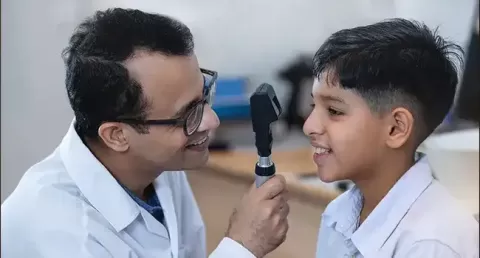
Paediatric ophthalmology is a specialised branch of eye care dedicated to diagnosing, treating, and preventing vision issues in infants, children, and adolescents. Unlike general ophthalmologists, a paediatric ophthalmologist is trained to handle complex developmental eye conditions, often using pediatric vision testing tailored to young patients.?
Why Early Eye Exams are Crucial?
From birth, a child's visual system, including the optic nerve/visual pathways and the visual cortex, develops quickly, with major early changes in infancy but continued maturation through early childhood.? If eye problems go unnoticed during these sensitive years of visual development, the brain may not learn to use vision normally, increasing the risk of long-term issues such as amblyopia (lazy eye) and lasting vision reduction.? Because many children can't recognize or clearly explain vision difficulties, early visits to a pediatric eye specialist and age-appropriate vision screening are important to catch problems early and start treatment when it is most effective
What are the Common Eye Problems in Children?
There are different eye conditions commonly seen in children that can be diagnosed and treated on time with the help of paediatric ophthalmology.
- Congenital Glaucoma?
Congenital glaucoma is a birth defect and is one of the main paediatric eye pain causes. The intraocular pressure increases as a result of a birth defect in the development of angle of the eye. The increased intraocular also leads to optic nerve damage and, if not treated earlier, may leave a lifelong defect. This condition is detected between birth and three years of age. Child is bothered by light and has watery eyes. Paediatric ophthalmology uses a set of examinations to diagnose congenital glaucoma. Examination of the front part of the eye, fundus and tonometry are used as a part of the diagnostic procedure for congenital glaucoma.
- Cataract?
Pediatric cataract is a condition in which the natural lens of the eye of the child becomes opaque due to accumulation of proteins inside it. This leads to hazy vision. Cataracts are usually known to be caused by growing age but may also present in children, known as paediatric cataracts. This condition can occur in newborn babies as well. Paediatric ophthalmology helps in the early detection of paediatric cataracts using examinations that may show missing or irregular red reflex.
- Refractive errors?
Refractive errors in children lead to conditions like myopia (nearsightedness), hyperopia (farsightedness) and astigmatism. These conditions can lead to poor or blurred vision. They can also lead to a condition called lazy eye. These changes cannot be prevented but can be detected early by a paediatric ophthalmologist. The doctor uses different exams to check the eyes and treat these conditions using corrective glasses or contact lenses.
- Squint or Strabismus
Squint or strabismus is a condition in which both eyes look in different directions. Squint is one of the most common eye problems in children and may lead to loss of vision in the affected eye if not detected on time. This loss of vision is called amblyopia and, if not treated on time, may become permanent. Squint occurs in babies and younger children and should be detected early with the help of paediatric ophthalmology. Squint is sometimes congenital. It may also occur as a result of refractive errors in the eye. Paediatric ophthalmology uses eye examination and routine checkups for the early detection and treatment of squint. Along with the above conditions, some other eye problems in children are retinopathy and drooping of the upper eyelids. Blurry vision, clouding of vision, watery eyes and red eyes are some of the common child eye problem symptoms. It is important that you recognise these symptoms and seek a paediatric ophthalmologist for the early diagnosis and treatment of these conditions. Role of the Pediatric Eye Doctor An eye specialists?not only diagnoses these conditions but also manages treatment, from prescribing corrective lenses to performing surgery when needed. They rely on pediatric vision testing techniques that are age-appropriate, ensuring accurate assessment even when a child can't fully cooperate.
Impact on Child Development
Untreated childhood eye disease can seriously affect learning, social interactions, and quality of life. Early detection via paediatric ophthalmology allows for timely interventions - improving school performance, boosting confidence, and promoting healthy eye development.
Why Choose Centre for Sight?
At Center for Sight, we have highly reputed paediatric ophthalmologists working with us across all our branches. We can assure parents that their children's needs will always be taken care of by our leading experts. With high-tech diagnostic tools and renowned surgeons and physicians on our teams, we can ensure you that your child's timely treatment and care will always be a priority.
Frequently Asked Questions
What is paediatric ophthalmology?
Why are early eye exams important for children?
What eye problems are commonly seen in children?
When should a child visit a paediatric eye doctor?
How does paediatric ophthalmology support child development?
Could not find what you are looking for?


