Best Eye Drops & Medicines for Eye Pain and Inflammation
- By Centre For Sight
- 5 minutes
Eye pain often starts as a small irritation, a bit of burning, slight redness, or discomfort after a long day on screens - and it's easy to ignore at first. But when it doesn't go away or begins to feel sharper or heavier, it can mean something more is going on. It could be something simple like dryness or allergies, or something that needs a closer look. That's why understanding the type of eye pain you're experiencing is the first step to choosing the right eye drop and getting lasting relief.
Types of Eye Pain & Its Causes
1. Surface Eye Pain (Ocular Pain) This type of pain occurs on the outer surface of the eye. You may notice:
- Burning or itching
- A rough or sandy feeling
- Stinging sensation
- Redness & mild swelling with pain
Root causes: Dry eyes, allergies, dust exposure, minor infections (like conjunctivitis), or small scratches on the cornea.
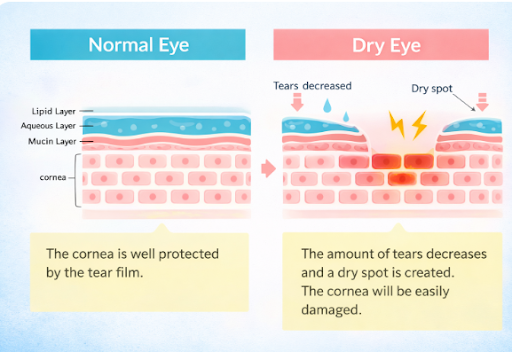
How to relax Surface Eye Pain: With proper eye drops & care, these conditions can improve within a few days.
2. Deep Eye Pain (Orbital Pain) This pain is felt inside or behind the eye, not on the surface. It is less common & needs more attention. You may feel:
- Deep, heavy, or throbbing pain inside the eye.
- Pressure around the eye or forehead is often seen with sinus problems, glaucoma, or nerve issues.
- Pain while moving the eyes. It can be a sign of nerve inflammation or infection around the eye.
- Eye pain along with headache. This is commonly linked to migraine or sinus infection.
Root causes: Glaucoma, uveitis, optic nerve inflammation, sinus infections, or migraine headaches.
Do Not Delay: If the pain feels deep, severe, or sudden, do not wait; see an eye doctor immediately.
3. Sharp or Stabbing Pain You may feel sudden or intense pain that may worsen with blinking/ eye movement.
Root causes: Corneal injury, foreign objects in the eye, severe dryness, or infections.
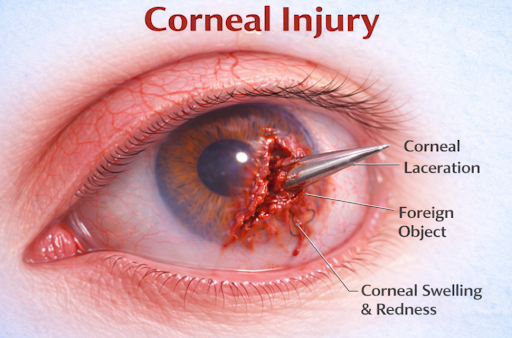
What to do: Rest Immediately. Apply hot/ cold compresses & consider over-the-counter eye drops for pain and inflammation. Seek urgent medical care.
What Are Pain-Relieving Eye Drops & Eye Pain Tablets?
Pain-relieving eye medicine & drops are used to reduce eye discomfort.
Common Types of Eye Drops & Eye Pain Tablets
- Artificial Tears: Lubricating eye drops for pain that relieve eye pain caused by dryness, dust, pollution, long screen use, or irritation.
- Medicated Eye Drops (Winolap / Winolap DS (olopatadine), Pataday, ComfiRx): These antihistamine eye pain drops are good for seasonal allergic eye disease.
- Ketorolac (Acular, Acular LS, Acuvail): This NSAID are a class of medication for eye treatment that reduces eye pain, burning, stinging, & swelling after cataract surgery, LASIK, or allergies. All of them must be used with caution
- Diclofenac: The best anti-Inflammatory eye drop for eye pain that helps reduce pain, inflammation, & light sensitivity after eye surgery.
- Flurbiprofen: It is an NSAID eye medicine that is used before eye surgery to maintain pupil dilation & reduce inflammation.
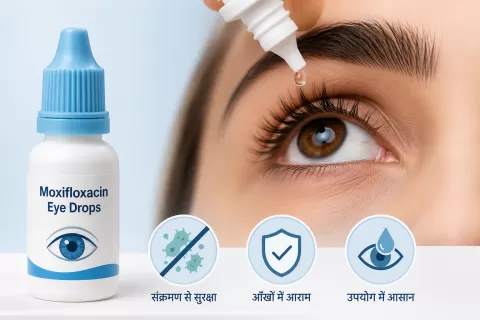
- Moxifloxacin / Ofloxacin: The most commonly used antibiotic for eye pain caused by bacterial infection with discharge or redness.
- Ibuprofen: They are types of pain relievers that are used for moderate eye pain and headache treatment.
- Acetazolamide (Diamox): Eye medicines used to lower high eye pressure & are usually prescribed in emergency cases like acute angle-closure glaucoma.
- Cetirizine (Zyrtec), Loratadine (Claritin), & Fexofenadine (Allegra): These anti-allergy tablets help control allergy-related eye symptoms. They reduce itching, watering, & mild discomfort.
- Prednisolone: They are prescribed only in serious conditions & must be taken under strict medical supervision.
Treatments for Pain in Eyes
- For minor irritation, you can try hot or cold compresses & artificial tears to soothe the eyes.
- For more serious conditions like infections, inflammation, or glaucoma, consult an eye specialist. They will prescribe eye drops for pain and inflammation that provide effective relief & prevent complications.
When to See an Eye Specialist?
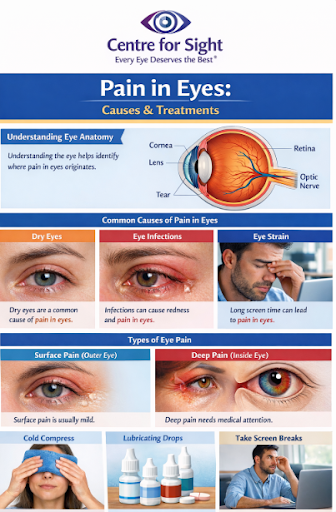
Do not ignore pain in eyes in the following situations:
- Sudden vision loss
- Severe eye pain
- Eye injury
- Chemical exposure to the eye
- Eye pain with nausea or vomiting
These symptoms may indicate a serious eye condition. Immediate medical attention is important to prevent permanent vision damage.
Frequently Asked Questions
Which eye drops are best for eye pain & inflammation?
Can I use over-the-counter eye pain drops without a prescription?
Are steroid eye drops safe for eye inflammation?
Can I take painkiller tablets for eye pain?
What is the difference between eye drops & oral eye medicine?
What is the best treatment for eye pain and redness?
How long does eye inflammation usually last?
What causes sharp pain in the eyes?
Why do I have pain in my right eye only?
Is eye pain with headache a serious condition?
Can sinus problems cause pain behind the eyes?
Can screen time cause eye pain and irritation?
Is eye pain a sign of serious disease?
Could not find what you are looking for?


