How to Reduce Eye Power and Prevent It Increasing?
- By Centre For Sight
- 10 minutes
Blog Summary
- Eye power means refractive error, or the lens power needed to focus light correctly on the retina.
- Existing myopia, hyperopia, or astigmatism cannot be permanently reversed naturally through food, exercises, or removing glasses.
- The main goal in children is to slow future myopia progression, not promise that the current minus number will disappear.
- Helpful habits include around 2 hours of outdoor time daily, sensible reading distance, and breaks from long near-work sessions.
- Evidence-based myopia-control options include low-dose atropine, myopia-control spectacles, multifocal contact lenses, and orthokeratology.
- LASIK can reduce dependence on glasses in suitable adults, but it is an optical correction and does not remove the underlying high-myopia retina risk.
People searching for how to reduce eye power want to know whether their spectacle number can become lower or stop increasing.
The confusing part is that glasses can correct eye power, while lifestyle changes and myopia-control treatments mainly try to slow future progression rather than permanently reverse an existing refractive error.
This guide explains what eye power actually means, what can and cannot lower it, and the evidence-based steps that can help it from increasing.
What Does “Eye Power” Actually Mean?
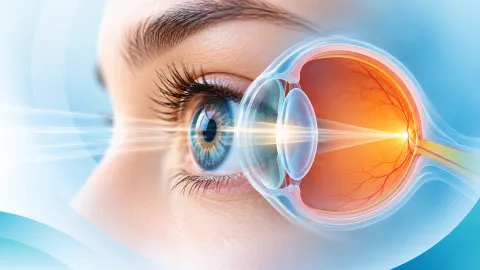
“Eye power” is a common everyday term in India for refractive error, or the amount of lens power needed to focus light correctly on the retina. The number is measured in dioptres (D).
For example, a prescription of −2.00 D means myopia, while +2.00 D means hyperopia. The number itself does not tell you how healthy the eye is; it mainly tells the doctor how much optical correction is needed to bring light into focus.
The refractive errors develop when the shape or length of the eye prevents light from focusing correctly on the retina.
| Type of eye power | What does it mean? | Prescription symbol | What looks blurry? |
|---|---|---|---|
| Myopia | Eye focuses light in front of retina | – | Distance |
| Hyperopia | Eye focuses light behind retina | + | Near, sometimes distance |
| Astigmatism | Cornea or lens has uneven curvature | CYL | Near and distance look distorted |
| Presbyopia | Ageing lens cannot focus well up close | ADD | Near vision after middle age |
Why Does Eye Power Increase?
The reason depends on which refractive error is changing.
Myopia and Eye Growth
Imagine the eye as a camera. The retina is like the camera sensor, and the cornea and lens focus light onto it. If the camera body becomes too long, the focused image falls in front of the sensor rather than directly on it. The result is myopia.
This is why myopia-control treatment increasingly focuses on axial length, meaning the length of the eyeball, rather than simply checking whether the glasses number changed.
Genetics
Family history matters. Children with one or two myopic parents have a greater chance of developing myopia, although genetics alone does not determine exactly what prescription the child will eventually have.
Too Little Time Outdoors
Children who spend less time outdoors have a higher risk of developing myopia. The protective effect appears to be linked mainly to outdoor exposure rather than simply playing sport.
A meta-analysis of five randomized trials involving 3,014 children found that increased outdoor time reduced the risk of developing myopia by about 24% compared with control groups. (ResearchGate) Outdoor time appears strongest at helping prevent or delay the onset of myopia but it should not be presented as a way to make an existing −3.00 D prescription return to zero.
Long Periods of Very Close Near Work
Studying, reading and screen use are normal parts of life, so children do not need to avoid them. The problem is more about how near work is performed.
International Myopia Institute guidance notes that reading at distances below about 20 cm and performing continuous near work for more than 45 minutes have been associated with greater myopia risk. A child reading a book 35–40 cm away with regular breaks is therefore creating a different visual environment from a child holding a phone 10–15 cm from the face continuously for hours.
Age
Childhood myopia becomes more negative because the eyeball continues growing longer than needed. This is one reason a −1.00 D prescription starting at age 7 deserves more attention than the same new prescription appearing in someone aged 21.
Myth Vs Fact Myth: Screen Time Increases Eye Power. Fact: Screens do not work like radiation that directly “damages” the eye into becoming myopic. Digital screens can cause digital eye strain, leading to temporary blur, dryness, burning and headaches without changing the person's permanent spectacle prescription. |
Can Eye Power Actually Be Reduced?
Sometimes the dependence on glasses can be reduced, but that is different from naturally reversing the underlying refractive error.
For true myopia, the eyeball has grown too long from front to back, so light focuses in front of the retina. Food, exercises or taking off your spectacles cannot make an elongated eyeball shorter again.
That distinction is important. So, if you are searching how to decrease eye power, the first question is whether you mean reducing the current spectacle number or preventing that number from becoming stronger. Those are two different problems and need different solutions.
| Goal | Is it possible? | How? |
|---|---|---|
| See clearly with existing power | Yes | Glasses or contact lenses |
| Permanently reduce dependence on glasses | Yes | LASIK or another refractive procedure |
| Make established myopia disappear naturally | No proven method | Lifestyle changes cannot reverse eye length |
| Slow increasing childhood myopia | Possible | Outdoor time + specialist myopia-control options |
Can You Decrease Eye Power Naturally?
There is no scientifically proven natural method that permanently reverses established myopia, hyperopia or astigmatism.
People asking how to decrease eye power naturally, how to reduce eyesight naturally, or how to reduce eyesight power come across advice involving eye exercises, carrots, herbal remedies, reduced screen time or not wearing glasses.
Some of these habits can support general eye health or make the eyes feel more comfortable, but they should not be confused with changing the anatomical refractive error.
How to Prevent Eye Power from Increasing in Children?
This is where the strongest evidence exists. The aim is not to promise that a child's −2.00 D will become −1.00 D. The aim is to reduce how quickly the eye progresses toward −3.00 D, −4.00 D or higher.
India already has a meaningful childhood refractive-error burden. A 2025 systematic review of 43 Indian studies estimated refractive errors in around 11% of schoolchildren, with myopia being the most common at approximately 8%. (National Library of Medicine)
1. Aim for Around Two Hours Outdoors Daily
Outdoor time is one of the simplest preventive measures available. The International Myopia Institute's latest light review supports a practical recommendation of at least 2 hours outdoors per day for children. This does not necessarily mean two hours of organised sport.
Children can:
- Play outside
- Walk
- Cycle
- Spend time in a playground
- Sit or socialise outdoors
Natural outdoor light exposure appears to be an important part of the benefit. A large Taiwanese school programme encouraged 120 minutes outdoors each day. After implementation, a previous long-term increase in reduced sharpness or clarity of vision among primary schoolchildren reversed direction. (Science Direct)
2. Keep Reading Material at a Sensible Distance
Avoid holding books, phones or tablets extremely close to the face. The eye doctors identified reading distances under about 20 cm as being associated with greater myopia risk. For example, a textbook sitting comfortably on a desk is preferable to a phone held just a few centimetres from the eyes while lying in bed.
3. Break Up Long Near-Work Sessions
Continuous near work matters. Children should periodically stop reading or using a screen and look into the distance rather than spending several hours with uninterrupted close focusing.
For myopia specifically, the International Myopia Institute highlights avoiding uninterrupted near work longer than about 45 minutes.
| Important: The well-known 20-20-20 rule, look about 20 feet away for roughly 20 seconds every 20 minutes is mainly used to reduce digital eye strain. It should not be advertised as a proven method for reducing spectacle power. |
4. Use the Correct Prescription
Parents sometimes deliberately give children weaker glasses because they worry that full-power glasses will “make the eyes dependent.” Evidence does not support this behavior.
So always use the correct and updated prescription in your children whether it's for nearsightedness or farsightedness, as it will help the eyes not deteriorate in clarity faster.
Medical Treatments That Can Slow Increasing Myopia
If lifestyle measures are not enough, modern myopia management has several evidence-based treatments. The realistic goal is slower progression, not a guarantee that progression will stop completely.
| Treatment | What does it do? | Does it remove existing myopia? |
|---|---|---|
| Low-dose atropine | Helps slow down eye growth | No |
| Myopia-control spectacles | Special lenses help slow eye growth | No |
| Dual-focus/multifocal contacts | Correct vision and help slow eye growth | No |
| Orthokeratology | Gently changes the shape of the cornea overnight | Temporarily improves daytime vision |
| Standard glasses | Makes vision clear | No |
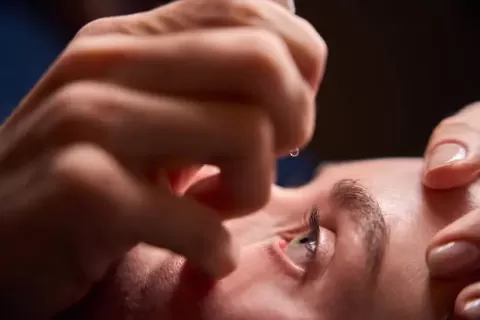
Low-Dose Atropine Eye Drops
Atropine is one of the most studied medicines for childhood myopia control. Low concentrations are used to slow progression rather than eliminate the existing prescription.
A 2025 randomized Indian study at AIIMS Bibinagar included 272 children aged 5–16 years whose myopia had been progressing by more than 0.50 D per year. After one year, progression averaged about 0.263 D with 0.05% atropine, 0.319 D with 0.01% atropine, and 0.759 D with placebo. The 0.05% group also showed less axial elongation than placebo.
The larger five-year LAMP study also supports sustained benefit from low-concentration atropine, while showing that treatment sometimes needs to continue or restart depending on the child's progression. (National Library of Medicine)
Atropine should be prescribed and monitored by an ophthalmologist because the ideal concentration is not the same for every child.
Myopia-Control Spectacle Lenses
Newer spectacle designs do more than simply make distance vision clear. They contain specially designed optical zones intended to influence the retinal signal involved in eye growth while providing normal central vision.
In a randomized two-year study of children aged 8–13, highly aspherical lenslet spectacles slowed refractive progression by 0.80 D and axial elongation by 0.35 mm compared with ordinary single-vision spectacles.
Another randomized trial using DIMS lenses found a two-year progression of approximately −0.41 D compared with −0.85 D in children using ordinary single-vision spectacles. (Research Gate) These lenses do not permanently reduce an existing minus number. Their aim is to make future progression slower.
Dual-Focus or Multifocal Contact Lenses
Special soft contact lenses can also create a myopia-control optical signal while correcting distance vision. A three-year randomized MiSight trial in children aged 8–12 found that refractive progression was 59% lower and axial elongation 52% lower than with ordinary single-vision contact lenses. (National Library of Medicine)
The BLINK randomized trial similarly found that children wearing high-add multifocal contact lenses progressed by about −0.60 D over three years, compared with −1.05 D using ordinary single-vision contacts. (Jama Network)
Orthokeratology
Orthokeratology, or Ortho-K, uses specially fitted rigid lenses worn overnight. The lenses temporarily reshape the cornea so many patients can see clearly during the day without glasses.
This change in corneal shape is temporary. If the lenses are stopped, the cornea gradually returns toward its original shape. However, Ortho-K can also slow childhood eye elongation. A meta-analysis of seven randomized trials involving 655 eyes found around 0.28 mm less axial elongation at 24 months compared with control treatment. (Research Gate)
Why Is Preventing High Eye Power Important?
Globally, the scale is increasing. A major analysis of 145 studies involving 2.1 million people projected that around 49.8% of the world's population could have myopia by 2050, with about 9.8% developing high myopia. (Science Direct)
Increasing myopia is not only about buying thicker glasses. As the eye becomes longer, the retina and other structures can undergo greater mechanical stress.
Higher levels of myopia are associated with increased risks of:
- Myopic macular degeneration
- Retinal detachment
- Open-angle glaucoma
- Certain types of cataract
This is why slowing a child's progression from, for example, a possible future −8.00 D toward a lower final prescription can matter even if the child will still need glasses.
Can LASIK Reduce Eye Power?
For suitable adults, yes, but LASIK is vision correction, not natural reversal of myopia. LASIK reshapes the cornea so that light focuses more accurately on the retina. This can reduce or sometimes eliminate the need for distance glasses or contact lenses.
A simple way to understand it is:
- Before LASIK: −4.00 D is needed in spectacles to focus light correctly.
- After successful LASIK: the reshaped cornea performs much of that optical correction itself.
- The person's glasses prescription therefore becomes close to zero.
However, LASIK does not shorten an elongated myopic eyeball, so the underlying retinal risks associated with previous high myopia do not simply disappear.
Conclusion
Understanding how to reduce eye power starts with separating an existing refractive error from its future progression. There is no proven exercise, food or natural remedy that reverses established myopia, but outdoor time, healthier near-work habits and evidence-based myopia-control treatments can help reduce how quickly a child's power increases.
Adults with stable prescriptions can reduce their dependence on glasses through suitable refractive procedures, but these are optical corrections rather than natural reversal of eye growth.
Frequently Asked Questions
Can eye power reduce naturally?
How can I stop my child eye power from increasing?
Does wearing glasses increase eye power?
Can eye exercises reduce minus power?
At what age does eye power stop increasing?

Could not find what you are looking for?


